Winter fashion is easily the best time of year. You’ve got the oversized coat, the snug turtleneck sweater, the structured blazer, the knit dress, the heavy wedding dress… you name it, it’s all there and dressing up is actually an event. The one downside to layering is that you do get some rather annoying bunching, rolling and all sorts of weird fabric lines, which can quite easily make an expensive outfit look a bit shabby.
That’s where good shapewear comes in as the ideal winter layering base. It does more than just smooth things out; it stops jumpers from clinging, keeps your tucked-in tops in place and provides a lovely, warm second skin layer in the winter. The catch, of course, is that if you get the wrong level of compression or the wrong fabric, you can quite easily turn a lovely winter day into a suffocating, roll-down hell.
Here is a practical, no-nonsense guide to choosing winter-ready pieces that keep you warm, snatched, and genuinely comfortable all day.
Why Winter Layering Needs a Different Shapewear Approach
Summer dressing is all about surviving heat in thin fabrics, whereas winter dressing is about managing volume and texture. Think about what happens when you wear three layers at once:
- Static cling from knits and wool: sweaters and fleece linings will stick to every bump and seam underneath.
- Waistband stacking: high-waisted jeans, thermal leggings, and a tucked-in top can create a lot of bulk around the waist.
- Long indoor-to-outdoor transitions: you step out into the crisp morning air and then walk into a heated office, café or shaadi venue where the compression can very quickly feel quite trapping.
A smart winter base layer acts like a smooth canvas. Your clothes glide over it instead of catching, bunching, or riding up every time you sit down.
Match the Shapewear Style to Your Winter Outfit
Not every winter outfit needs full-body sculpting. Matching the cut to what you are actually wearing saves you from discomfort and awkward lines.
1. Bodycon Knit Dresses and Ribbed Midi Skirts
Knit dresses are winter staples, though thick ribbed fabrics still show panty lines and hip dips if the base is uneven.
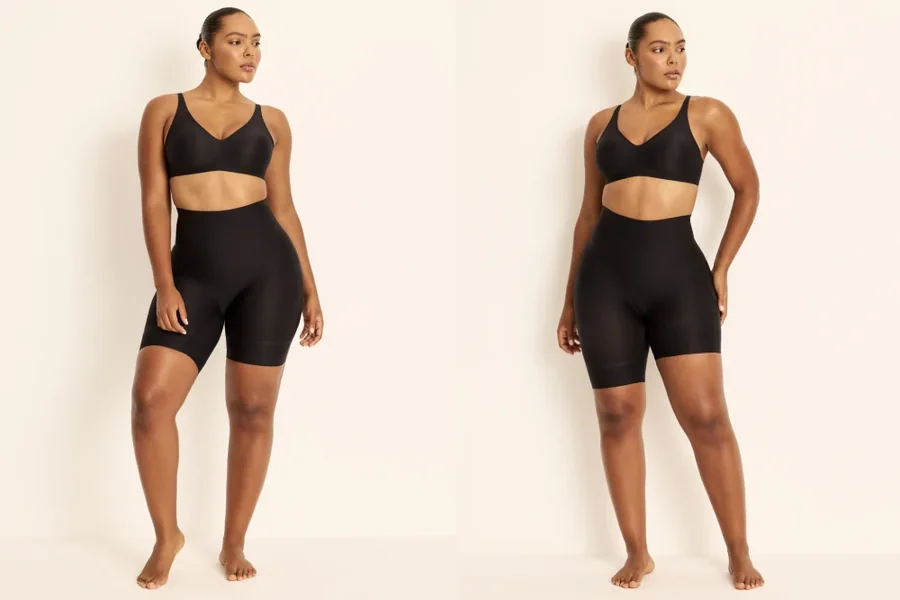
- Best bet: mid-thigh sculpting shorts or a seamless shaping slip.
- Why it works: The mid-thigh shorts stop the chafing on the thigh when you’re wearing a wool skirt and keep the line from the hip right down to the thigh completely uninterrupted. Look for laser cut, raw edge hems so the leg openings don’t dig in or show through with a very clingy knit.
2. Turtlenecks, Fitted Tops, and High-Waisted Trousers
Nothing ruins a sharp blazer-and-trouser look faster than a top that keeps untucking itself or bunching around your waist.
- Best pick: A sleek shaping bodysuit.
- Why it works: A bodysuit stays neatly tucked in no matter how many times you reach up or sit down. It gives you a smooth waist and back definition without any extra bulk of fabric at your belt line. Many of the styles are open bust so you can pair them with your preferred everyday bra for a custom level of lift and support.
3. Heavy Ethnic Wear, Sarees, and Velvet Lehengas
Winter weddings mean raw silk blouses, heavy lehengas, and draped sarees that pull at the waist.
- Best pick: A saree shapewear petticoat or high-waisted tummy-tucker shorts.
- Why it works: Traditional cotton petticoats tend to be quite puffy around the waist and hips. The contoured saree shaper contours to your shape, holds the heavy pleats in place without any digging of drawstrings and makes walking and dancing a whole lot easier.
4. Oversized Sweaters and Layered Co-ord Sets
When your top is already relaxed and cosy you don’t need any intense sculpting at all.
- Best pick: Light-compression high-waisted briefs or seamless smoothing shorts.
- Why it works: good light control keeps your core warm, stops cold drafts when your sweater rides up and stops the buttons on your jeans or the zips from digging into your skin.
Pick the Right Compression Level (Do Not Overdo It)
More compression does not automatically mean better results, especially when you are wearing heavy layers for eight to ten hours.
- Light compression: feels like a very snug hug. Ideal for everyday office wear, casual sweaters and long travel days where you just want some smoothing without being all that restrictive.
- Medium compression: provides good core support and clean shaping under fitted knit dresses, blazers and work trousers. It’s in the right ballpark in terms of balance between comfort and structure.
- Firm compression: Built for special events, structured gowns, and wedding outfits where you want maximum hold. Save this for shorter occasions rather than ten-hour desk days.
Yaar, if you have to lie down on your bed and fight for your life to pull a piece up, size up. True fit should smooth and support, never making breathing or eating a festive meal feel like a chore.
Fabric and Construction Details That Matter in Cold Weather
When shopping for winter layering pieces, check the fabric blend and finishing details before hitting checkout:
- Breathable microfiber and nylon-spandex blends: These fabrics feel silky against the skin, create zero friction under wool or cotton, and help regulate temperature so you do not overheat indoors.
- Silicone grip strips on high waists: If you are choosing high-waisted shorts or briefs, look for a thin silicone band along the inner top edge. Without it, sitting down in high-waisted jeans will make the waistband roll straight down.
- Cotton gussets for all-day hygiene: Even in sleek synthetic blends, a breathable cotton-lined gusset is non-negotiable for daily comfort.
- Bonded, flat seams: Thick stitched seams can press into your skin under tight winter boots, jeans, or waistbands. Seamless or bonded edges stay invisible and prevent irritation.
Quick Sizing and Wear Tips for Zero Regrets
- Always buy your true size as sizing down leads to rolling, edge bulging and uncomfortable pressure right around your ribs. Measure your waist and hips fresh before you order.
- Step into it, don’t pull it over your head. Step into the shorts and bodysuits from the feet up, gently rolling the fabric over your hips and torso so the compression panels are in the right place.
- Do the sit test prior to removing the tags: put the piece on with your actual winter trousers or dress and sit in a chair for five minutes. Check for rolling waistbands, digging leg hems and any restriction to breathing.
Layer Smart, Stay Cosy
Winter styling should feel effortless, warm, and put-together, not like a constant battle with bunching clothes. Choosing the right shapewear gives your sweaters, coats, and festive outfits a clean foundation while adding a subtle layer of warmth underneath. Stick to your true size, pick a compression level that matches your plans for the day, and let your winter wardrobe do the rest.