
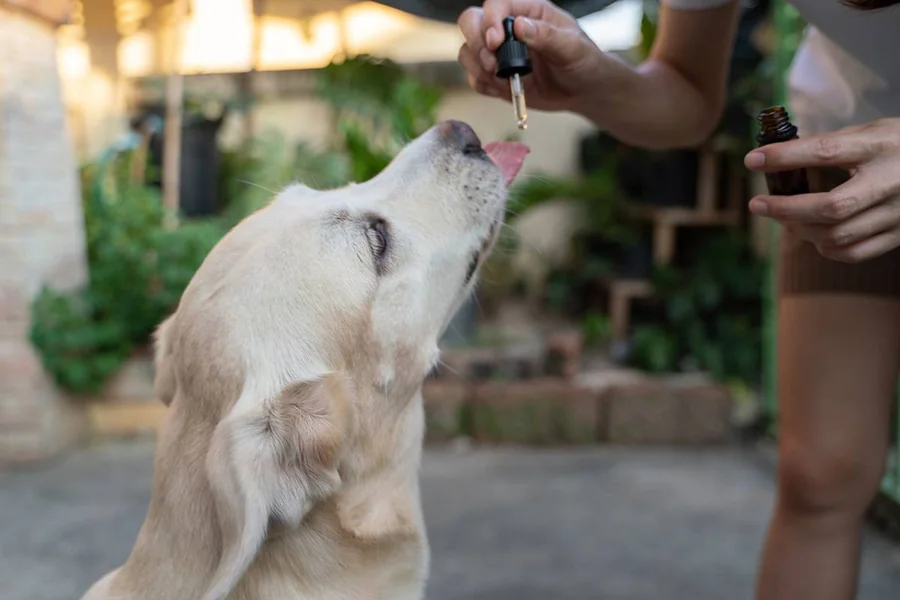
Twenty minutes and one kitchen table. That’s all it takes to find out whether a pet CBD brand deserves your money before a single bottle ships to your door.
Most people do it backwards. They buy, then they scroll reviews, then they squint at a label in their kitchen lighting, and by then the card is already charged. Flip the order around and the whole decision gets easier. You are going to run what I call the Kitchen Table Audit: six checks you can do tonight with a phone, a laptop, and a dog asleep at your feet. Anyone shopping for CBD oil for pets can use it, and you’ll never again rely on the front of a bottle to tell you the truth.
Here’s the promise. Work through these six checks and you’ll have a ranked shortlist by the time the kettle boils. No jargon, no brand loyalty, no guessing.
Check one: can you find the actual certificate of analysis?
A certificate of analysis, or COA, is the lab report that shows what’s really in the bottle. It should list cannabinoid content and a screen for contaminants like heavy metals, pesticides, and microbials. The catch: every serious brand knows this now, so most will say “lab-tested” somewhere on the page. The test isn’t whether the word appears. It’s whether you can find a document in under two clicks.
If the COA is buried behind a contact form, that’s a yellow flag. If it doesn’t exist at all, close the tab. You wouldn’t buy a used car with no title, and you shouldn’t buy a tincture with no paperwork.
You can’t tell whether something works. But you can tell whether the label matches the lab report. That’s the entire homework assignment, and it takes about four minutes.
The COA you find should name the batch, not just the brand
Here’s where most buyers get lazy. They see a green PDF logo, feel reassured, and stop reading. Slow down. A lab report for “our 550mg product” printed eight months ago tells you almost nothing about the bottle in your cart.
What you want is a batch or lot number that matches the bottle you’re buying, with a date recent enough to be relevant. According to the Federal Trade Commission, companies have to back up advertising claims with evidence, which is exactly why you should expect the evidence to be specific and current rather than a one-time document from whenever the brand launched.
My honest stance: a brand that publishes fresh, batch-specific reports is telling you something about how it operates. One that publishes a single undated PDF is telling you something too. Guess which story I’d trust with my own dog’s dinner bowl.
Check two: what does the label actually say about milligrams?
Milligrams per bottle, milligrams per serving, and the size of the dropper are three different numbers, and brands play shell games with them. A 550mg bottle sounds impressive until you realize it’s spread across thirty servings and the recommended dose is two droppers. Do the math on the back of an envelope.
Chances are you’ll discover two brands selling wildly different real-world amounts at nearly the same price, and that one of them is quietly charging a lot more per milligram. This is the single fastest way to feel smarter than the product page.
Check three: read the ingredient line like it’s a rental contract
You want a short list. Carrier oil, cannabinoid extract, maybe a flavoring. That’s it. If you can’t pronounce half the panel, ask yourself why a plant extract needs six helpers to work.
While you’re there, check whether the brand states that its hemp was grown under a licensed program. The U.S. Department of Agriculture oversees hemp production in the United States, so a brand that can point to where its plants came from has done part of the homework for you. A brand that stays vague about sourcing is handing the homework back to you, unopened.
Check four: how does the brand talk about dosing?
Now we get to the part I care about most as a buyer. Does the site give you a real dosing guide, or does it mumble? A good guide will talk about starting small, going slow, and watching your dog’s behavior over a stretch of days instead of promising a magic number.
Companies that publish measured, cautious language tend to be the ones worth your time. That’s my read after years of watching brands duck the hard questions. When a site tells you to be patient, it’s usually because the people behind it have actually met a dog.
Check five: what does the review page sound like off script?
Read the three-star reviews first. Five-star reviews tell you what a brand wants you to hear. Three-star reviews tell you how a brand behaves when something goes slightly wrong, which is far more useful information for someone about to spend a hundred dollars.
One concrete scenario I keep coming back to: a friend of mine bought a calming tincture for her dog’s thunderstorm anxiety, and the bottle arrived with a broken dropper. What mattered wasn’t the broken glass. It was that the company answered her email in a few hours and shipped a replacement with no argument. That single exchange gave her more confidence than any homepage badge ever could.
Check six: does the return policy survive the fine print?
Read the guarantee out loud to yourself. If it says “risk-free” but requires an unopened bottle, it isn’t risk-free. It’s a marketing line with a lock on it. A real guarantee lets you return an opened product, because the whole point of trying something new is that you don’t know how it goes until your dog tries it.
A quick decision guide you can keep
| What you found | What it means | What to do
|
|---|---|---|
| Batch-specific COA, short ingredient list, honest dosing guide | This brand has done real work | Shortlist it and compare price per milligram |
| One old COA for the whole product line | Possibly just marketing | Contact support and ask for the current batch report |
| No COA anywhere, vague sourcing, “risk-free” with conditions | You’re the product | Close the tab |
How to make the final call
Once you’ve run all six checks, put your shortlist in order of price per milligram and then break ties with customer service. Send one email with a specific question, like “which batch is currently shipping?” and watch how quickly you get a real answer. That single test separates the brands that want a repeat customer from the ones that want a one-time transaction.
If you only remember one thing from all of this, remember that the label is a claim and the lab report is the receipt. A brand willing to show you the receipt earns a shot at your dog’s dinner bowl. A brand that hides it doesn’t, no matter how pretty the packaging looks on your counter.
So here’s my challenge. Open the website of whichever pet CBD brand you’re considering right now and time yourself. How long until you find a current COA for the exact bottle you’d be buying? If the answer is more than two minutes, you’ve just learned everything you need to know. What did your audit turn up?