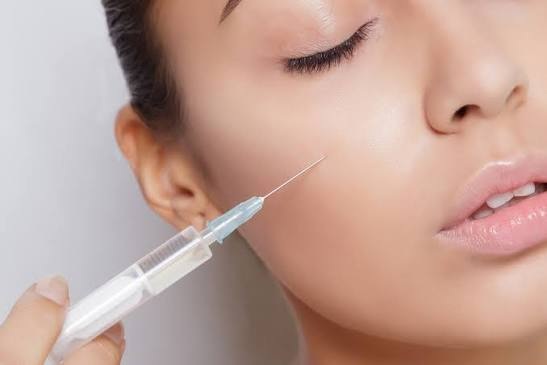
Cross-linked hyaluronic acid gels manufactured in South Korea now occupy a massive footprint in international aesthetic clinics. What began as a localized regional market built around rapid product iterations has transformed into an export powerhouse, altering practice economics from Latin America to Eastern Europe. Practitioners who once relied exclusively on legacy European or American brands increasingly maintain parallel inventory lines stocked with Seoul-manufactured options.
This market shift is not an accident of clever marketing. It rests on specific manufacturing choices, aggressive regulatory approvals across emerging markets, and cost structures that force clinic directors to reevaluate their overhead.
1. Monophasic and Biphasic Architectural Versatility
To understand why South Korean cross-linked gels are taking clinical market share, one has to look at how different manufacturers process hyaluronic acid (HA). Early dermal filler technology divided products strictly into two camps: monophasic homogeneous gels and biphasic particulate mixtures. Korean pharmaceutical firms refused to pick a single side. Instead, they built manufacturing plants capable of producing both physical forms under strict rheological specifications, often within the same brand family.
Monophasic fillers, produced by thoroughly blending cross-linked HA into a smooth, cohesive gel, deliver predictable, uniform expansion with lower swelling ratios. They flow easily through thin 27-gauge or 30-gauge needles. Biphasic fillers, by contrast, suspend cross-linked HA particles within a non-cross-linked HA fluid carrier. This particulate structure provides higher elastic modulus (G′) and superior projection capacity when placed deep against the periosteum.
Korean engineers refined these cross-linking technologies by manipulating the reaction conditions of 1,4-butanediol diglycidyl ether (BDDE). By controlling temperature, reaction duration, and washing protocols during the BDDE modification phase, manufacturers achieve high cross-linking efficiency with minimal residual free BDDE. The American Society for Dermatologic Surgery (ASDS) emphasizes that minimizing unreacted BDDE is vital for reducing long-term delayed-type hypersensitivity reactions and foreign body granulomas.
+——————+—————————–+—————————–+
| Rheological Feature| Monophasic Korean Fillers | Biphasic Korean Fillers |
+——————+—————————–+—————————–+
| Extrusion Force | Smooth, constant pressure | Variable, initial peak force|
| Tissue Cohesivity| High internal cohesion | Low particle-to-particle |
| Primary Indication| Superficial/Mid-dermis | Deep periosteal projection |
| Swelling Index | Low to moderate | Moderate to high |
+——————+—————————–+—————————–+
When injecting the tear trough or fine perioral lines, a monophasic gel with low swelling potential prevents the Tyndall effect and chronic fluid retention. Conversely, non-surgical rhinoplasty or chin augmentation requires the firm structural support that only a high-G′ biphasic gel can supply. Korean product lines typically provide three to five distinct cross-linking densities within a single brand line, allowing injectors to stay within one familiar product ecosystem regardless of the anatomical depth required.
2. Advanced Cross-Linking Protocols and BDDE Washing Techniques
Raw hyaluronic acid raw material is inherently unstable in biological tissue. Hyaluronidase enzymes break down natural HA within 24 to 48 hours. Cross-linking creates covalent bonds between polymer chains, turning a liquid into a three-dimensional hydrogel matrix capable of resisting enzymatic degradation for months.
South Korean research institutions pioneered multi-step washing processes that systematically eliminate trace BDDE. The European Medicines Agency (EMA) sets strict safety ceilings for residual free BDDE, demanding levels under 2 parts per million (ppm). Top Korean manufacturers routinely target residual BDDE levels below 0.5 ppm—often near the limits of detection in gas chromatography testing.
Low free BDDE levels do not simply look good on a chemical analysis certificate. They correlate directly with real-world clinical safety. Lower chemical impurity loads reduce acute inflammatory responses upon implantation.
The mechanical durability of these products relies on optimizing the modification degree (MoD). If an engineer cross-links too many sites on the HA chain, the gel becomes rigid, brittle, and biologically incompatible. If they cross-link too few, the body metabolizes the filler within weeks. Korean formulations hit a middle ground—or more precisely, a high-density cross-linking matrix achieved at lower overall cross-linker concentrations—preserving the natural biocompatibility of the polysaccharide backbone while extending longevity up to 12 to 18 months.
3. Economic Disruption and Inventory Sourcing
High-volume medical aesthetic clinics face continuous upward pressure on consumable supply costs. Legacy Western hyaluronic acid fillers often carry steep wholesale price tags per syringe, leaving injectors with squeezed profit margins or forcing them to pass exorbitant fees down to patients. Korean manufacturers disrupted this model by scaling up automated manufacturing in facilities located in Cheongju and Songdo, drastically lowering unit production costs without compromising international manufacturing standards.
Clinic directors managing multi-chair facilities must manage cash flow while maintaining adequate clinical stock across soft, medium, and hard gel densities. Purchasing through verified distributors allows practices to maintain flexible stock levels without over-committing capital. Practices evaluating international supply chains can review wholesale options for Korean dermal fillers to analyze current pricing tiers, concentration options, and volume availability across major Asian filler lines. Studying wholesale breakdowns provides clinic management with a baseline for comparing overhead expenditure against traditional North American and European suppliers.
Economic accessibility transforms treatment planning. When syringe acquisition costs drop by 40% to 60%, injectors can execute full-face restoration protocols involving four to six syringes without pushing the total invoice beyond the reach of average patient budgets.
This financial dynamic has accelerated filler adoption across developing markets. It has also altered practice models within saturated Western markets, where mid-tier clinics use Korean HA lines as competitive entry-level offerings alongside premium domestic brands.
4. Rapid Clinical Iteration Driven by Regional Aesthetic Preferences
South Korea boasts one of the highest per-capita plastic surgery and cosmetic intervention rates globally. This dense domestic patient market functions as a living laboratory for aesthetic innovation. What Korean patients demand today often becomes global aesthetic protocol three years later.
For example, the demand for subtle anatomical sculpting—such as contouring the zygomatic arch, restoring temporal volume, or sharpening the mandibular angle without creating a heavy or artificial appearance—necessitated fillers with very specific rheological properties. Injectors needed high-viscoelasticity gels that stay precisely where placed rather than migrating into adjacent fascial planes under muscle movement.
The South Korean Ministry of Food and Drug Safety (MFDS) maintains rigorous regulatory standards comparable to the US Food and Drug Administration (FDA) or European CE Mark framework, yet its proximity to manufacturing hubs speeds up human trial logistics. Local manufacturers gather real-world clinical data from Seoul-based aesthetic dermatology chains at unprecedented speeds.
When physicians report minor clinical issues—such as excessive extrusion force, minor gel fragmentation, or early breakdown in high-mobility areas—Korean R&D teams iterate quickly. Revised formulations featuring modified particle sizes or altered lidocaine concentrations hit the regional market within months rather than years.
5. Integration with Multi-Modal Aesthetic Protocols
Modern aesthetic medicine rarely relies on dermal fillers alone. The contemporary standard of care combines cross-linked HA gels with energy-based devices, micro-focused ultrasound, poly-L-lactic acid (PLLA) bio-stimulators, and botulinum toxin injections.
Korean aesthetic protocols pioneered these stacked combination treatments. Because Korean fillers were engineered alongside skin-tightening technologies (such as high-intensity focused ultrasound and fractional radiofrequency), their thermal stability profile became a key design consideration.
Preclinical work examining HA hydrogels under thermal stress demonstrates that highly cross-linked, purified HA matrices withstand localized temperature spikes without undergoing rapid degradation. When a practitioner performs RF microneedling or ultrasound tightening over an area previously treated with a stable Korean HA gel, the filler retains its structural integrity.
Furthermore, Korean manufacturers frequently integrate 0.3% lidocaine hydrochloride directly into the gel matrix. The inclusion of lidocaine reduces patient discomfort during administration, eliminating the need for extensive nerve blocks or lengthy topical anesthetic wait times.
The American Society of Plastic Surgeons (ASPS) highlights that patient compliance and satisfaction rates rise dramatically when procedural discomfort is minimized. Painless delivery combined with immediate structural support makes these products ideal for same-day combination protocols.
Key Suitability and Exclusion Considerations
Not every patient presenting for facial rejuvenation is an appropriate candidate for hyaluronic acid implantation. Clinical screening remains paramount, regardless of product origin or cross-linking technology.
+——————————————+——————————————+
| Absolute Contraindications | Relative Precautions / Delay Treatment |
+——————————————+——————————————+
| Active local skin infection or herpes | Recent dental procedures within 14 days |
| Known hypersensitivity to BDDE | Uncontrolled autoimmune flare-ups |
| Known allergy to lidocaine (if combined) | Active anticoagulant or aspirin therapy |
| History of anaphylaxis or severe allergies| Concomitant vaccination within 7 days |
+——————————————+——————————————+
A common mistake among newer injectors is treating patients who exhibit active facial dermatitis or localized acne lesions near the planned injection sites. Impaired skin barrier function dramatically increases the risk of bacterial inoculation during needle or cannula passes, which can lead to early bio-film formation or delayed-type infectious nodules.
Similarly, patients with a history of multiple severe allergies or hyper-reactive immune responses require careful evaluation. While purified cross-linked HA is intrinsically non-immunogenic, any foreign material introduced into dermal or subcutaneous spaces carries a baseline risk of delayed inflammatory reaction.
Clinical Limitations and Unresolved Questions
Despite their growing market share and refined manufacturing, Korean dermal fillers are not a universal panacea. Critical limitations persist across safety, regulatory, and practical domains.
The primary concern among Western practitioners remains the patchwork nature of international regulatory approvals. While many Korean fillers hold MFDS approval and CE marks under European Medical Device Regulation (MDR) guidelines, fewer have completed the costly, multi-center pivotal trials required for FDA PMA approval in the United States. Injecting non-FDA-approved products within the US creates complex legal liability issues for licensed practitioners, regardless of the product's safety track record in Asia or Europe.
Complication management presents another technical nuance. When a vascular occlusion occurs—the most feared acute complication in dermal filler administration—the injector must flood the area with hyaluronidase to break down the gel.
Vascular Compromise Suspected
│
├──► Immediate Cessation of Injection
│
├──► Warm Compress & Vigorous Tissue Massage
│
├──► High-Dose Hyaluronidase Administration (e.g., 500–1500 IU)
│
└──► Re-evaluate Capillary Refill Time (< 2 Seconds Target)
However, high-density cross-linked matrices engineered for extended longevity can show variable resistance to enzymatic dissolution. Highly cross-linked HA gels require significantly higher doses of exogenous hyaluronidase and longer treatment protocols to achieve complete breakdown compared to lightly cross-linked, soft monophasic gels.
A practice rep asked me last month why so many clinics keep both soft European fillers and firm Korean fillers in stock. The answer lies in this exact trade-off. Injectors want firm, low-cost structural gels for bone-anchored lift, but they often prefer ultra-reversible, lightly cross-linked options when working in high-risk vascular zones like the glabella or nasal tip.
Long-term comparative data remains another gap. While short-term safety profiles (up to 12 months) are well-documented across Asian clinical literature, independent 5-year longitudinal studies comparing Korean HA formulations directly against long-standing Western control fillers in diverse, multi-ethnic patient cohorts are still emerging. Skin thickness, dermal density, and enzymatic degradation rates vary across different ethnic demographics.
The Evolving Aesthetic Balance
The international dominance of South Korean dermal fillers marks a permanent shift in how aesthetic devices are developed, priced, and deployed. By combining high-purity BDDE cross-linking technology with aggressive price positioning and versatile physical formulations, Korean manufacturers have reshaped clinic purchasing behavior worldwide.
As regulatory bodies continue to harmonize international medical device standards, the artificial divide between "Western" and "Eastern" aesthetic supplies will continue to blur. Practitioners who understand the rheological differences, safety parameters, and structural limits of these products will remain best equipped to deliver safe, predictable outcomes for an increasingly knowledgeable patient base.