
Open any suitcase before a trip and you will probably find the usual suspects: too many clothes, a charger tangled around something important, a pair of shoes that may never leave the hotel room, and a passport checked three times before departure.
But one of the most useful things you can take abroad is not actually packed at all.
It lives inside your phone.
Travel has become surprisingly dependent on connectivity. Not because everyone wants to spend a holiday staring at a screen, but because the phone has quietly become the tool that holds the journey together.
The boarding pass is there. So is the hotel reservation. The map, train ticket, restaurant booking, translation app and message from the host explaining which doorbell to press are probably there too.
Mobile internet is no longer simply something nice to have while travelling. It has become part of the infrastructure of the trip.
And the way travelers connect abroad is changing with it.
The Strange First Hour After Landing
There is a particular moment that almost every international traveler knows.
You have just landed. The airport looks unfamiliar. Signs point in several directions. Your hotel is somewhere across the city and you are trying to work out whether the blue train, the green bus or an expensive taxi is the right choice.
Naturally, you reach for your phone.
That is also the moment when old-fashioned travel connectivity tends to become inconvenient.
International roaming may be expensive. Airport Wi-Fi may require registration or disappear the moment you walk outside. Buying a local SIM means finding a shop, comparing unfamiliar plans and replacing the SIM already in your phone.
None of these problems is enormous on its own.
They are simply annoying at exactly the wrong moment.
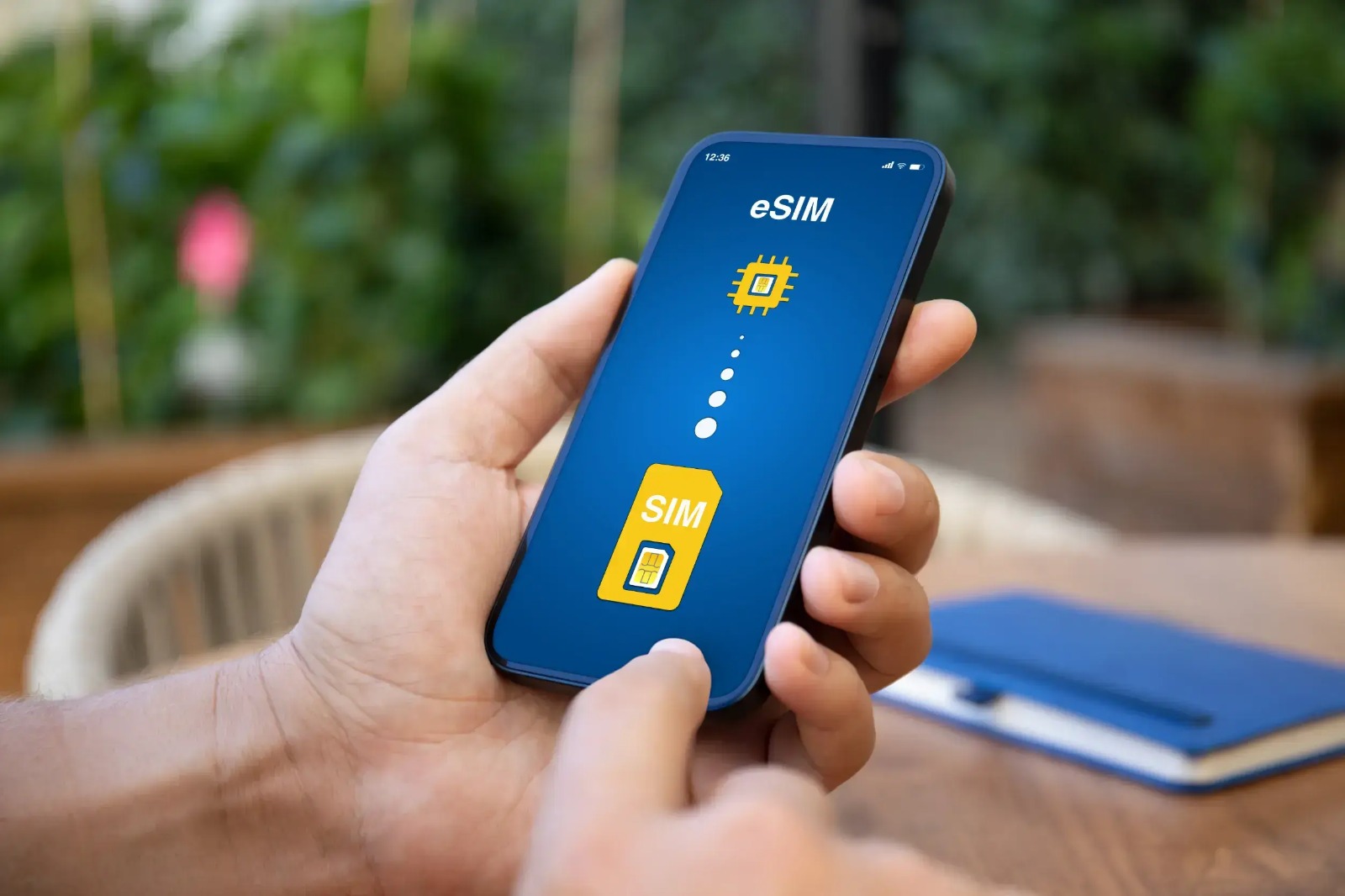
The rise of the esim changes that sequence. Instead of arriving in a country and then figuring out how to connect, travelers can arrange mobile data before leaving home and install the plan digitally on a compatible device.
No plastic card needs to be collected. No tiny SIM tray needs to be opened beside an airport baggage carousel.
You land, switch on your phone and continue with the journey.
That is the appeal.
A Small Technology With a Very Travel-Friendly Idea
The concept behind an eSIM is fairly simple.
Traditional SIM cards are physical. An eSIM is built into the device and allows compatible mobile plans to be installed digitally.
For everyday phone users, that may sound like a technical distinction.
For travelers, it changes something much more practical.
It means connectivity can become part of trip preparation in the same way as booking a hotel or downloading a boarding pass.
You can choose a data plan before departure. Install it while you still have reliable Wi-Fi at home. Keep your regular SIM in the phone. Then use the travel plan when you reach your destination.
The clever part is not that eSIM technology feels futuristic.
It is that, once installed, it barely feels like technology at all.
Nobody Travels to Look for a SIM Card
Travel is full of small administrative jobs that nobody actually enjoys.
Currency exchange. Airport transfers. Luggage rules. Check-in forms. Passport queues.
Buying a SIM card after landing belongs in the same category.
It is something travelers have traditionally done because there was no better alternative.
But imagine arriving in Rome late in the evening.
You want to reach your apartment. You need Maps. The host has sent the entrance code through WhatsApp. Your train ticket is stored in your email.
Stopping first to search for a mobile shop does not make the trip more authentic.
It simply delays everything else.
The value of digital connectivity is therefore not really about the SIM itself. It is about removing one unnecessary task from the beginning of a journey.
That is often what the best travel technology does.
It removes friction without becoming the centre of attention.
Europe Is Where the Idea Becomes Especially Useful
A trip to one country is straightforward.
A trip through Europe can become something else entirely.
You might start with breakfast in Paris, take a train to Brussels and continue to Amsterdam the following day. Another itinerary could combine Milan, Zurich, Munich and Vienna without requiring a single flight between them.
Modern European travel makes borders feel remarkably easy to cross.
Connectivity should feel the same.
This is where regional mobile plans become particularly practical. Instead of thinking about internet access separately in every country, travelers can use one plan designed to work across several destinations.
For someone planning a multi-country journey, an esim europe plan can remove the need to arrange a new local SIM each time the itinerary crosses another border.
That becomes especially valuable on road trips and rail journeys.
One minute your phone is navigating through northern Italy. A few hours later you are checking a hotel address in Austria.
The traveler has moved countries.
The phone simply keeps doing its job.
The Phone Has Become the Modern Travel Companion
It is easy to complain that phones have become too present in travel.
There is some truth in that.
Nobody flies halfway around the world just to refresh a social media feed.
But connectivity has also made independent travel far easier.
You can walk through an unfamiliar neighborhood without worrying about getting permanently lost. You can translate a sign in seconds. You can check whether the last train has already departed. You can find a pharmacy nearby, change a reservation or discover that the quiet restaurant two streets away has hundreds of excellent reviews.
Used well, a connected phone does not necessarily distract from travel.
It can give travelers more freedom to explore.
Knowing that a map is available means you can wander further.
Knowing that transportation information is accessible means you can change plans.
Knowing that accommodation details are stored online means you do not need to carry printed confirmations everywhere.
The technology stays in your pocket until you need it.
That is probably exactly where travel technology belongs.
There Is Also Something Nice About Not Swapping SIM Cards
Anyone who has used physical travel SIMs knows the ritual.
Open the phone.
Find the tiny metal pin.
Remove the SIM tray.
Take out the home SIM.
Place it somewhere extremely safe.
Spend the rest of the holiday wondering whether that “extremely safe” place was your wallet, backpack, passport holder or hotel desk.
Then repeat everything when you return home.
It worked.
It was never elegant.
Digital SIM technology makes the process feel more like switching a setting than changing a physical component of your phone.
Many compatible devices can also keep the normal SIM available while using the travel eSIM for mobile data, which can be useful when travelers want to retain access to their usual number.
It is one of those upgrades that seems minor until you have used it.
Afterward, the old method suddenly feels much older.
Good Travel Technology Should Be Almost Invisible
Think about the technologies that have genuinely improved travel.
Online boarding passes did not make airports exciting. They simply made one part of flying easier.
Digital hotel bookings did not change why people travel. They removed paperwork.
Navigation apps did not replace the pleasure of discovering a city. They made it easier to recover after taking a wrong turn.
eSIM technology fits into the same pattern.
Its purpose is not to become part of the travel experience.
Its purpose is to get out of the way of it.
You should be thinking about the café around the corner, the train leaving tomorrow morning or whether you have enough daylight left to climb to the viewpoint.
You should not be thinking about SIM trays, roaming tariffs or whether airport Wi-Fi will reach the taxi rank.
The Best Things in Your Luggage May Not Be in Your Luggage
Travel habits change slowly and then suddenly feel obvious.
Paper airline tickets disappeared.
Printed maps moved into phones.
Hotel vouchers became confirmation emails.
Even wallets are becoming less necessary as payments move onto devices.
The physical travel SIM may be heading in the same direction.
And perhaps that is what makes the eSIM such an interesting travel tool.
There is nothing extra to carry.
Nothing extra to lose.
Nothing taking up another centimetre of suitcase space.
Yet when you step into a new city, open your phone and immediately know where you are going, it may turn out to be one of the most useful things you brought with you.