
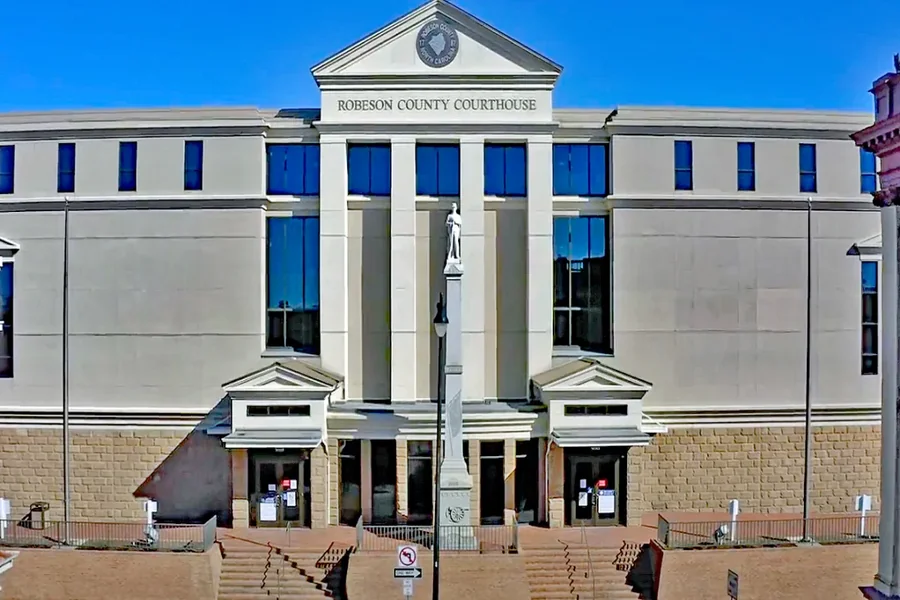
Nine hundred forty-nine square miles. That is the figure that makes Robeson County different from every other county in North Carolina, and most people who live outside it have never heard the number. It also happens to be the reason a two-lane road through the Lumber River bottomlands can feel like its own small world.
Robeson County is the largest county in North Carolina by land area, and that size shapes almost everything about how it works. It was carved out of Bladen County in 1787 and named for Colonel Thomas Robeson, a Revolutionary War officer. Lumberton serves as the county seat, and the county is home to twenty-nine townships. The Lumber River runs through it, winding past towns that have their own identities, which is part of the charm and also part of the logistical headache of running local government across that much ground.
If you have ever needed a deed record, a building permit, or a tax bill explanation, you already know that most people encounter a county through its offices rather than its history. That is where a well-organized county website earns its keep, and Robeson County puts routine services like bill pay, records lookups, and department contacts in one place so you are not driving forty minutes to ask a question that takes two minutes to answer online.
Why the Size of the County Matters More Than You Think
When a county is the biggest in its state by land area, the practical facts start adding up fast. A single school system, a single emergency management office, and a single sheriff’s department all have to cover territory that would fit several smaller counties inside it. That means response times, road maintenance schedules, and service coverage are not abstract talking points. They are the daily reality for anyone who lives out past Maxton or down toward Fairmont.
Geography also explains the county’s role as a travel corridor. Interstate 95 cuts north to south along the eastern seaboard and passes directly through the county, and Interstate 74 runs east to west, linking the coast to the mountains. The county sits roughly an hour and a half from the beaches and about three hours from the high country. It has quietly become a halfway point for a lot of travelers heading up or down the East Coast, whether they notice the name on the exit sign or not.
The landscape is dominated by the Lumber River, a blackwater river that functions as the county’s recreational backbone. According to the state’s encyclopedia of North Carolina history, the river and the surrounding wetlands have shaped settlement patterns in the region for centuries, which is why so many communities sit close to the water rather than out in the open fields.
What Actually Happens Inside a County Government
People throw around the phrase “county government” without ever breaking it down, so here is the honest version. Robeson County runs a long list of departments, and each one handles a specific slice of daily life. Think about the last year of your own life and match it up:
- Register of Deeds for property records and vital documents
- Taxes for property values, vehicle taxes, and appeals through the Board of Equalization
- Public Utilities and the Water Department for service and billing questions
- Emergency Management and E-911 for alerts and disaster coordination
- Social Services, Health, and Veteran Services for resident support programs
- Parks and Recreation for camps, baseball, and special needs registration
That is not a complete list, but it gives you the shape of it. Most residents interact with two or three of those departments in a given year, and the ones they call are usually determined by whatever just went wrong. A burst pipe sends you to utilities. A new roof sends you to permitting. A death in the family sends you to the Register of Deeds. Nobody plans to learn this stuff. You learn it because life hands you a form.
Getting Things Done Without a Trip to Lumberton
Here is the part I would tell a new resident first: check what you can do online before you get in the car. Counties have moved a lot of routine transactions to the web over the past decade, and Robeson is no exception. You can pay taxes online, pay a water bill, look up deed information, and pull up the county GIS system to check property lines and parcels. That GIS tool alone saves people hours when they are trying to figure out where a property boundary actually sits.
The county also runs a Code Red notification system for community alerts and weather warnings. Signing up takes a few minutes and it is the kind of thing you forget about until a storm is moving in and you are glad your phone buzzed. If you live anywhere near the river, that registration is worth the small effort.
For anything that cannot be handled on a screen, the county keeps a public directory of department contacts and managers. The North Carolina Department of Natural and Cultural Resources maintains broader state records that often complement what you find at the county level, especially if you are tracing land history or family records that cross county lines. Knowing which level of government holds which document saves a wasted afternoon.
A Short Walk Through the County’s Story
Robeson County was incorporated in 1787, which means it has been operating for well over two centuries. That kind of timeline is easy to gloss over, but it matters for anyone doing historical or genealogical research. Records get moved, fires happen, and boundaries shift. The county celebrated its 225th birthday back in 2012, and local historians have been piecing together the fuller story ever since.
The region’s history includes the Lumbee people and a deep, complex set of communities that have shaped the county’s identity. If you want a serious account of the people and events that formed this part of the state, the National Park Service publishes material on regional and tribal history that is a reasonable starting point before you dig into local archives.
My Honest Take on Using a County Site
Most county websites are ugly and useful in equal measure, and I would rather have useful. The trick is knowing what you came for before you land on the homepage. If you need a tax rate, go straight to the tax section. If you need a permit, find the department that issues it and call the number listed rather than filling out a form and hoping. Government forms get rejected for small reasons, and a two minute phone call beats a two week delay.
Keep your own copies too. Download the confirmation, screenshot the receipt, save the PDF. Systems change, staff change, and having your own record means you never have to argue about whether something was filed.
Where This Leaves You
Robeson County is a big, old, river-cut place with a government that has to serve a lot of ground with a finite budget. The history explains the shape of it. The services explain the daily use of it. If you live here, bookmark the site and sign up for the alerts. If you are just passing through on I-95, at least now you know what the exit sign is pointing at. Which department would you end up calling first?