One of the most known fashion movements in fashion history are the 1960s mod. It developed due to the high-energy culture of the youth of the 1960s and was related soon enough to London, contemporary art, music, and a new generation of people who wanted to get out of the conventional clothing. Easy lines, bold colors, geometrical, and tight hemlines were part of the movement that introduced a new identity that was absolutely different as compared to previous decades.
The mod appearance was more than a few clothing style. It represented a change in attitude. Youth demanded fashions which are current, imaginative and communicative. Designers reacted with new shapes and quirky designs which soon moved out of Britain and inspired wardrobes worldwide.
Mod-inspired fashions are still seen today in modern collections. Mini dresses, knee-high boots, graphic patterns and streamlined tailoring are also trendy as the retro style is not only nostalgic but surprisingly up-to-date.
What Made 1960s Mod Fashion So Different?
The mod style was created at the time when the culture was changing significantly. The youth gained more and more control in music, entertainment and fashion, which made the newer culture of youth more solidified and powerful compared to the past generations.
The customary clothes were mostly focused on being formal and conservative. Mod fashion opposed that style through simpler styles and younger look. Clothing was more clean, shorter and experimental.
A mini skirt took its place as one of the icons of this movement. Its slim profile marked a drastic shift of the female fashion and soon became connected with the self-assured attitude of the decade.
Geometric designs were also crucial. Stripes, circles, squares, checks and abstract prints were used on dresses, tops, skirts and coats. These fashions mirrored the impact of art and came up with outfits that were visually attractive.
Color was more daring, too. Combination of black and white were the most popular ones and bright orange, yellow, pink, blue and green were components that gave energy to most mod wardrobes.
The general design was neat and smooth, not obtrusively ornamented. Mod designers relied on shape, color, and proportion as opposed to the elaborate details to make clothes stand out.
Key Pieces of 1960s Mod Fashion
Much of the clothing adopted a tight connection with the mod style and is used as an inspiration by designers even now.
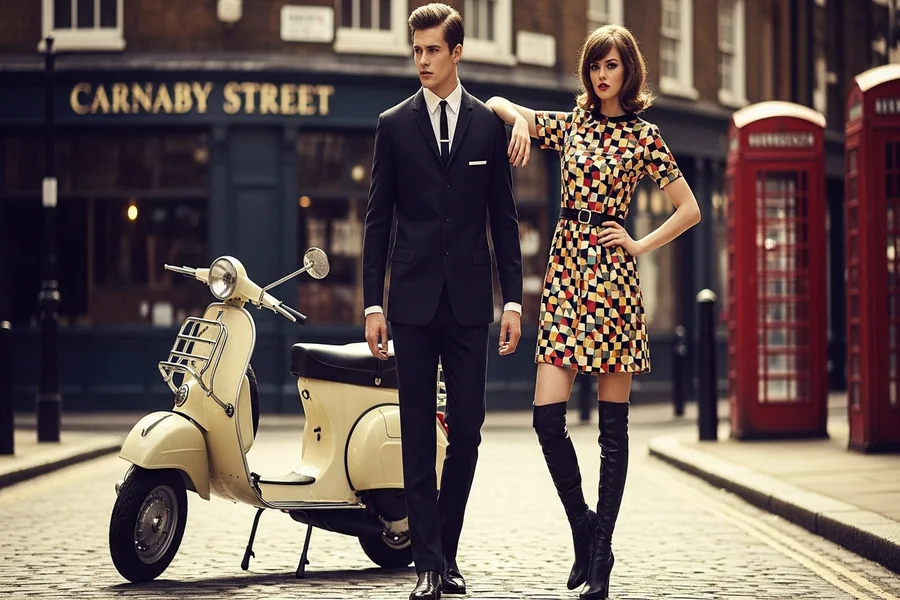
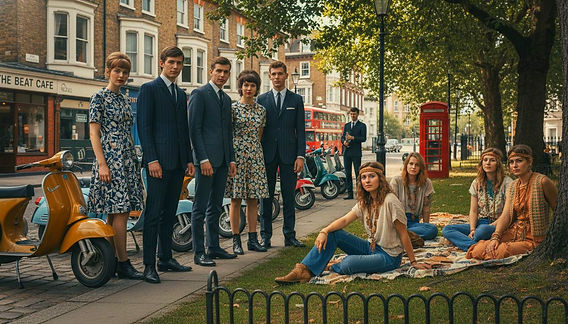
One of the most notable ones was the mini dress. It was usually uncircumscribed in its A-line form, very brightly printed or plainly colored; the shape made it easy to wear with a youthful shape.
Another necessity was shift dresses. Their relaxed form was straight giving them freedom of movements and appearing smooth. They were commonly used together with plain accessories in order to emphasize on the design.
A-line skirts were also popular since they could give one a clean line without being too voluminous. They might be matched with fitted jackets, lace blouses or tailored jackets.
Turtlenecks were a classy alternative to regular blouses. The sleeveless dresses and coats were worn with a sleeve especially well over their streamlined form.
Knee-high boots were a popular mode of shoe. They were often constructed of leather or synthetic material and paired with short skirts and dresses as well as providing a bold graphic effect to the outfit.
Easy and tight-fitting jackets and coats were a strong finishing touch to many mod looks. Their formal shapes added more sophisticated look without losing the modernity of the movement.
There was also a tendency towards the use of accessories which were often plain, yet unique. Sunglasses were oversized, jewelry was geometrical, headbands solidified the look, and the sizes of handbags were small, not overwhelming clothes.
The Influence of Music and British Youth Culture
One of the significant factors in the development of 1960s mod fashion was music. London developed into a youth subculture and a young person tended to dress in a certain way with an image of their favourite performers and social groups.
Popularity of sharp tailoring, slim pants, close-fitting jacket, and well-polished shoes among young men were popularized by bands and musicians. Fashion can be seen to evolve in the same direction with shorter dresses, graphic designs and bold accessories becoming more prevalent among women.
The identity of the movement is also because of the scooter culture that became synonymous with British mods. Fashion was now related to a broader lifestyle that encompassed music, night life, art and social independence.
The spread of these looks outside of London was aided by television, magazines and photography. With the spread of images of British youth culture to other parts of the world, mod fashion started to persuade other designers and consumers.
This affinity between music and clothes is significant to date. The sharp silhouettes and graphic art form which characterized the original mod movement are still borrowed by modern musicians and fashion creators.
How to Wear Mod-Inspired Fashion Today
The simplest and most significant way to make mod style into a contemporary wardrobe is to concentrate on several well-known things instead of shifting attention to a whole historical garment.
An ankle boot can be worn with a structured handbag and a plain shift dress to be taken into a modern understanding. Should you go separates, an A-line skirt and a tight turtleneck will combine to offer a neat outfit that echoes the time.
Black-and-white mixes work particularly well since they attain the graphic nature of vintage mod wear without seeming costume-like.
A single statement piece can also be used to bring bright colors. Colorful jacket, geometrical dress or a pair of boots can contribute some retro to what is otherwise simple outfit.
Knee-high boots are another simple method of introducing a new sense of mod in clothing. They are friendly to shorter skirts and dresses, as well as fitted outerwear.
Accessories may be a less obvious way. Big sunglasses, geometric earrings, plain headbands or a small structured handbag can all allude to the decade without overwhelming an outfit.
The key is balance. The mixture of old-fashioned-inspired garments and modern basics would achieve the appearance that would be both new and at the same time stable to the 1960s mood.
Why 1960s Mod Fashion Still Influences Style
That timelessness of mod fashion of the sixties can be attributed to its straightforwardness and self-assurance. Its white lines and light bodies can easily be re-interpreted by contemporary designers, and its striking designs and color choices will always serve as an inspiration.
The decade is frequently rediscovered by fashion houses by refreshing mini dresses, geometric prints, well-structured coats and clean tailoring. Modern designers can keep the initial spirit and apply modern fabrics and construction methods.
Also, the movement attracts the attention of individuals who love retro fashion since it is recognizable and does not imply the use of complex layering or abundance of accessories.
Its focus on individuality is especially topical. Mod fashion was a way of young people establishing their identity style using clothes and music as well as culture. Such a concept still permeates contemporary fashion, where the expression of self is in many cases prioritized to adhering to one particular trend.
The style has been revisited in film and television, music videos, as well as in editorial photography. With every revival the aesthetic is presented to a new generation with its original essence intact.
Final Thought
Mod fashion in 1960s transformed the thinking of the youth style. Mini skirts, shift dresses, geometric designs, loud color, knee high boots and clean tailoring combined to issue a new visuals language that communicated the sense of energy among a shifting generation.
Its legacy is still present as the designs can be readily reinterpreted. A plain geometrical dress, shaped jacket, or high boots would add a touch of 1960s flair to a contemporary wardrobe without becoming dated.
It was more than a fashion movement as the mod movement was a sign of creativity, confidence and independence. The simplicity and boldness that it is still known to possess, have made it remain a timeless icon among designers and fashion enthusiasts.
FAQs
What is 1960s mod fashion known for?
It is known for mini skirts, shift dresses, geometric prints, bold colors, knee-high boots, turtlenecks, and clean tailored silhouettes.
Where did mod fashion begin?
The movement is strongly associated with London and British youth culture during the early and middle parts of the 1960s.
What colors were popular in mod fashion?
Black and white were especially popular, along with bright shades such as orange, yellow, pink, blue, and green.
What shoes were popular with mod outfits?
Knee-high boots, simple loafers, polished flats, and other streamlined footwear were commonly paired with mod clothing.
Can I wear 1960s mod fashion today?
Yes. Modern wardrobes can easily incorporate shift dresses, geometric prints, A-line skirts, turtlenecks, and tall boots for a contemporary retro look.
Why is mod fashion still popular?
Its clean shapes, bold patterns, youthful energy, and emphasis on individuality make it easy to adapt to modern fashion.