
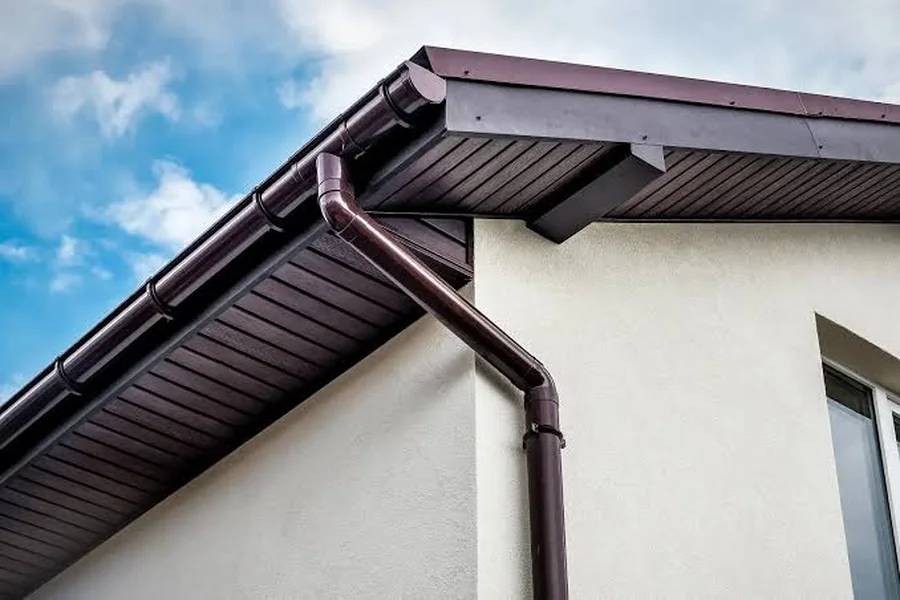
Most homeowners don’t think about their gutters until they’re standing in a wet basement at 11 p.m. wondering where the water came from. I’ve watched that exact scene play out more than once on my own street, and the culprit was almost never the roof. It was a sagging run of aluminum that somebody meant to fix two summers ago.
So here’s the honest version: your gutters aren’t decoration. They’re the drainage system that decides whether rainwater ends up in your flower beds or against your foundation. Get them right and you’ll forget they exist for a decade. Get them wrong and you’ll pay for it in foundation repair, rotted fascia, and a permanently damp crawl space.
If your current setup has already given up, you don’t need to overthink the first step. A properly sized, properly pitched gutter install in Lexington solves most of the water problems homeowners chase for years, and it solves them in an afternoon. The rest of this guide is about making sure you ask for the right thing before anyone shows up with a ladder.
What Kentucky Weather Does to Cheap Gutters
Central Kentucky gets the worst of both worlds. Summer thunderstorms dump water fast, and winter delivers the freeze-thaw cycle that pries seams apart like a cheap zipper. According to the National Weather Service, this part of the country regularly sees heavy convective storms, which means your gutters are handling a lot of volume in a very short window.
That matters more than most people realize. A gutter doesn’t fail gradually. It fails on the day it faces the one storm it can’t handle, and then you’re dealing with overflow right at your foundation.
What I’d look for first is capacity, not color. Homeowners fall in love with a finish and ignore the width, then wonder why water sheets over the edge during a downpour. Width is the boring spec that actually protects your house.
Does Size Really Matter? Yes, and Here’s the Simple Math
Gutters come in standard sizes, and the size you need depends on two things: how much roof surface drains into a given run, and how steep that roof is. A steep roof sheds water faster, so it needs more capacity in the same linear feet.
Here’s the rough rule I use when I’m thinking through a house: the larger the roof area feeding a downspout, the larger the gutter and downspout need to be. Skipping that step is the single most common mistake I see, and it’s an expensive one because undersized gutters fail on the exact days you need them most.
Ask whoever quotes your job to explain the sizing. If they can’t, that’s your answer about whether they’re the right fit.
Seamless vs. Sectional: Which One I’d Pick
Seamless gutters get formed on site from a single coil of metal, so the only seams are at corners and downspout outlets. Sectional gutters arrive as pre-cut lengths you snap or screw together, which means more joints and more places for water to find a way out.
Seams leak. Not always immediately, and not always dramatically, but they leak. Every joint is a spot where expansion, contraction, and a few winters of freeze-thaw can open a gap.
Sectional still makes sense in a few situations. If you’re patching a shed, covering a rental you don’t plan to keep, or working on a tight budget for a structure that doesn’t sit near a foundation, the math changes. For a primary home on a slab or with a basement, I’d spend the extra money on seamless every time. It’s the difference between maintaining gutters and ignoring them.
Half-Round or K-Style? A Quick Way to Decide
K-style gutters are the flat-backed, profile-shaped runs you see on most American homes. They hold more water for their width and blend into standard fascia trim. Half-round gutters are the smooth, semicircular ones, and they’re what you’ll spot on older homes and historic districts.
Half-round has a real functional advantage: debris slides off the curved surface instead of catching on a flat bottom. K-style wins on capacity and hiding behind a fascia board.
So how do you pick? Match the house. If your home has ornate trim, deep eaves, and a porch with turned posts, half-round looks intentional and K-style looks like a retrofit. If you’ve got a plain ranch built in the nineties, K-style disappears the way it should. I’d let architecture decide this one and let the performance specs sort out the rest.
The Installation Details That Decide Whether It Works
Materials are only half the job. The other half is what happens on installation day, and it’s where a lot of contractors quietly cut corners.
1.Pitch. Gutters need a slight slope toward the downspout. Too flat and water sits. Too steep and the downspout end looks droopy from the street.
2. Hanger spacing. Hangers hold the run in place. Space them too far apart and the gutter sags under the weight of standing water or a winter ice load.
3. Downspout discharge. Water has to exit well away from the foundation. A downspout that dumps straight down beside the wall undoes everything the gutter just accomplished.
4. Fascia condition. Anyone installing gutters should check the wood behind them first. Hanging new gutters on rotted fascia is a repair waiting to happen.
I’d also ask about gutter guards before you sign anything. They’re not for everyone, but if you’re surrounded by mature trees, they can save you a ladder climb every fall.
Why Water Management Is the Whole Point
It’s tempting to treat gutters as a cosmetic line item, but the stakes are real. The Environmental Protection Agency points out that managing runoff around a home matters for both your property and local waterways, and the Department of Housing and Urban Development has long flagged poor drainage as a leading contributor to moisture problems in basements and crawl spaces.
You don’t need to become a hydrology nerd. You just need to understand that every gallon your gutters fail to move away from the house is a gallon looking for somewhere else to go, and the path of least resistance usually runs along your foundation.
Your Pre-Quote Checklist
Before you call anyone, walk the perimeter and check these off. Five minutes now saves you a lot of explaining later.
1.Look for streaks down your siding, especially under the gutter line.
2. Check the ground for trenches or washed-out mulch beneath downspouts.
3. Get on a ladder, or look with binoculars, and see whether gutters are pulling away from the fascia.
4. Note any standing water in the gutter after a rain.
5. Check your basement or crawl space for new damp spots or musty smells after storms.
Write down what you find. Photos help. A contractor who hears a clear description of the symptoms can quote more accurately than one guessing from the driveway.
Where This Leaves You
Choosing gutters isn’t complicated once you strip it down to two questions: how much water does your roof shed, and where should that water go? Everything else, the profile, the finish, the color, is a preference you get to enjoy after the function is handled.
So before the next storm rolls through, take a walk around the house and really look at what’s up there. If what you see makes you uneasy, that feeling is worth acting on. Call a local crew, get a free inspection, and ask them the sizing question. The answer tells you a lot about whether they know what Kentucky rain actually does.