
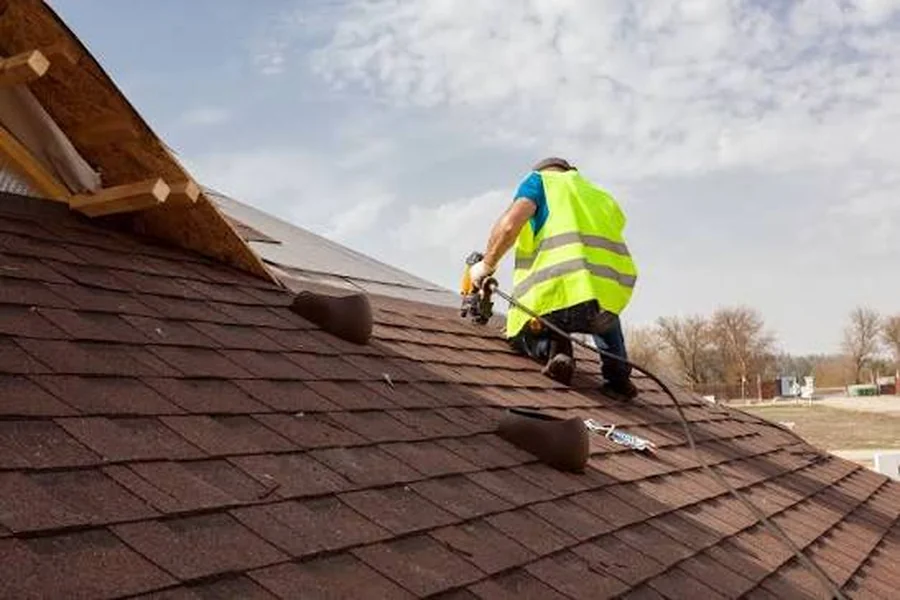
Your roof takes a beating long before you ever notice it. One hail event, one ice-dam winter, one stretch of 60 mph wind gusts, and the clock on your shingles accelerates by years. Across the country, homeowners are learning this the hard way, and the numbers behind that lesson are sobering.
Severe weather is no longer a coastal concern or a once-a-decade inconvenience. It’s a recurring annual force reshaping how, when, and why homeowners call a roofer. If you own a home, understanding that shift can save you tens of thousands of dollars and a whole lot of headache.
The Scale of the Problem Has Changed Dramatically
Billion-dollar weather events used to feel exceptional. They aren’t anymore. In 2024 alone, the U.S. experienced 27 billion-dollar disasters, and those events resulted in $182.7 billion in damages, which was higher than the five-year average annual cost of $149.3 billion. That’s not a blip. That’s a new baseline.
What makes this directly relevant to your roof is where all that money goes. Roofs are almost always the first line of contact in a wind, hail, or ice storm. They absorb the impact before walls, windows, or foundations ever see stress. So when disaster spending spikes, roofing demand spikes alongside it.
According to Harvard’s Joint Center for Housing Studies, in 2022 and 2023 combined, spending to repair damages caused by hurricanes, tornadoes, wildfires, flooding, and other catastrophic events represented 6 percent of all home improvement expenditures nationally, up from less than 4 percent two decades earlier. That’s a 50 percent increase in the share of home improvement dollars going straight to disaster recovery, and roofing sits at the center of that spending.
The implication for homeowners is real. When a major storm rolls through a region, local roofing contractors get slammed with calls simultaneously. That surge compresses timelines and makes it harder for unprepared households to get prompt help. Having a relationship with a trusted local roofer before the storm, not after, is one of the smartest moves a homeowner can make.
Why Roofing Demand Holds Up Even When the Economy Doesn’t
Here’s something that might surprise you: roofing is one of the more recession-resistant trades in construction. The U.S. Bureau of Labor Statistics projects employment of roofers to grow 6 percent from 2024 to 2034, faster than the average for all occupations. That growth is driven not by speculative new construction, but by the relentless cycle of storm damage, aging housing stock, and deferred maintenance catching up with homeowners.
Think about it this way. If the economy slows and you can’t afford a kitchen renovation, you wait. But if a hailstorm punches holes in your shingles in October, waiting until spring is not really an option, especially in a state like Michigan where freeze-thaw cycles will push water into every crack the storm opened. Roofing, much more than most home improvement categories, runs on necessity rather than discretionary spending.
This also shapes who you can realistically hire. Demand has created a significant skilled-labor constraint across the industry, which means experienced, certified contractors carry real weight. Certifications like HAAG (for storm damage inspection) and contractor-tier relationships with manufacturers such as Owens Corning separate the roofers who can actually document and process an insurance claim from those who simply show up with shingles.
The “Storm Window” Framework: What Homeowners Keep Getting Wrong
Most homeowners operate on what you could call a crisis model of roofing decisions. Something visibly breaks, they call someone. That model costs more and delivers worse outcomes than a simple alternative: the Storm Window framework.
The Storm Window framework treats your roof the way a car owner treats an oil change. You don’t wait for the engine to seize. You schedule periodic inspections on a calendar that accounts for your local weather exposure, your roof’s age, and the materials it’s made of. In Michigan specifically, that means accounting for heavy lake-effect snow load in winter, spring hail risk, and summer wind events, all of which stress a roof in different, layered ways.
The practical steps look like this:
- Schedule a professional inspection after any named weather event, even if you see no obvious interior damage. Shingle granule loss and flashing separation are invisible from the ground.
- Document your roof’s condition annually with dated photos. If you file a claim two years after a storm, a photo record can make or break the outcome.
- Know your shingle type and its rated wind speed. Many standard three-tab shingles are rated to around 60 mph. Michigan wind events can exceed that.
- Establish a contractor relationship before storm season. Contractors prioritize existing clients and inspection-file customers when post-storm call volume spikes.
- Understand your insurance policy before you need it. Actual cash value and replacement cost value policies produce very different payouts on the same damage.
That fifth point is where a lot of homeowners leave money on the table. A HAAG-certified contractor can do more than fix your roof; they can document damage in the specific language insurance adjusters need, which makes the claims process move faster and settle better.
Choosing a Contractor in a Post-Storm Surge
After a significant weather event, storm chasers follow the damage. These are out-of-state contractors who show up with low bids, pull fast permits, and disappear before warranty issues surface. They’re predictable, they’re everywhere after a major storm, and they’re genuinely risky to hire.
The contrast is a contractor with a permanent local presence, a verified BBB standing, and manufacturer certifications that require ongoing training and quality audits. In Livingston County and Genesee County, for instance, homeowners who want verifiable credentials and real accountability can turn to roofing services in Fenton MI from On Top Roofing, which holds HAAG certification for storm damage inspection and Owens Corning Platinum Preferred status, meaning their work is backed at the manufacturer level.
That kind of vetting matters more than it used to. As disaster spending has grown, so has the contractor market. More demand means more operators, and not all of them carry the same accountability structure.
| What to Check | Why It Matters | Red Flag
|
|---|---|---|
| BBB Accreditation | Shows commitment to resolving disputes | No listing or unresolved complaints |
| HAAG Certification | Qualifies contractor to inspect and document storm damage for insurers | Storm chasers rarely carry it |
| Manufacturer Tier Status | Platinum/Preferred tiers require volume, training, and quality audits | Vague claims of “preferred” with no tier name |
| Local Physical Address | Permanent presence ensures warranty accountability | Only a phone number or P.O. box |
| Insurance Claim Experience | Speeds up settlement; reduces underpayment risk | Contractor unfamiliar with adjuster process |
“The impacts of severe storms are rarely short-lived, with local markets often seeing elevated remodeling spending for several years after a disaster,” according to the Harvard Joint Center for Housing Studies’ Improving America’s Housing 2025 report. That extended recovery window is exactly why local contractor relationships built before a storm pay off long after the clouds clear.
What This Means for Your Home Right Now
The data from NOAA’s 2024 billion-dollar disaster recap shows 27 events causing $182.7 billion in total damage, a figure well above the five-year average. And the Harvard JCHS research published in 2025 confirms that disaster-driven repair spending as a share of all home improvement dollars has grown by more than 50 percent over the past two decades. Roofing sits at the intersection of both trends.
If your roof is more than 15 years old, or if your area absorbed a significant weather event in the past 18 months, the smart move is an inspection now, not after the next storm makes that decision for you. Find a contractor with permanent local roots, verifiable credentials, and real experience navigating the insurance process. The roof is the one part of your home that fails invisibly until it fails catastrophically. Getting ahead of that is not overcaution. It’s just good ownership.