Matching gutters to a house exterior starts with deciding whether they should blend into the fascia, relate to the roof, or become a deliberate architectural accent. Profile and downspout placement matter as much as color. The finished design should look considered while still collecting and discharging runoff effectively.
For a homeowner planning an exterior update, gutters belong in the same conversation as roofing, trim, stucco, and drainage. Leaving them until the end can narrow the available choices.
Choose which exterior element the gutter should follow
Matching the fascia or trim can make the gutter read as part of the roof edge. Relating it to the roof color can emphasize the roofline. A contrasting finish can create a stronger outline, especially where the architecture already uses dark or metallic details.
There is no universal best choice. A pale gutter on pale fascia may recede visually, while the same gutter against a dark roof edge may stand out.
Judge the whole elevation. Windows, doors, roof planes, and landscaping all influence how a narrow horizontal line appears. A color that looks appealing on a small sample can feel much stronger across a long eave.
Select the profile with drainage in mind
K-style and half-round gutters create different visual effects. The actual channel dimensions, slope, outlet arrangement, and installation determine whether a proposed system suits the runoff load.
Do not assume that two profiles with the same nominal width have identical capacity. Ask the installer to explain the selected profile for the particular roof.
Modern, traditional, and custom homes can each accommodate more than one gutter style. Existing architectural details and the amount of visible fascia help guide the choice.
Southwest Seamless Rain Gutters offers seamless gutter installation options across Arizona and Southern Nevada. A useful project consultation should address profile and finish alongside the roof's collection zones.
Plan downspouts as visible vertical elements
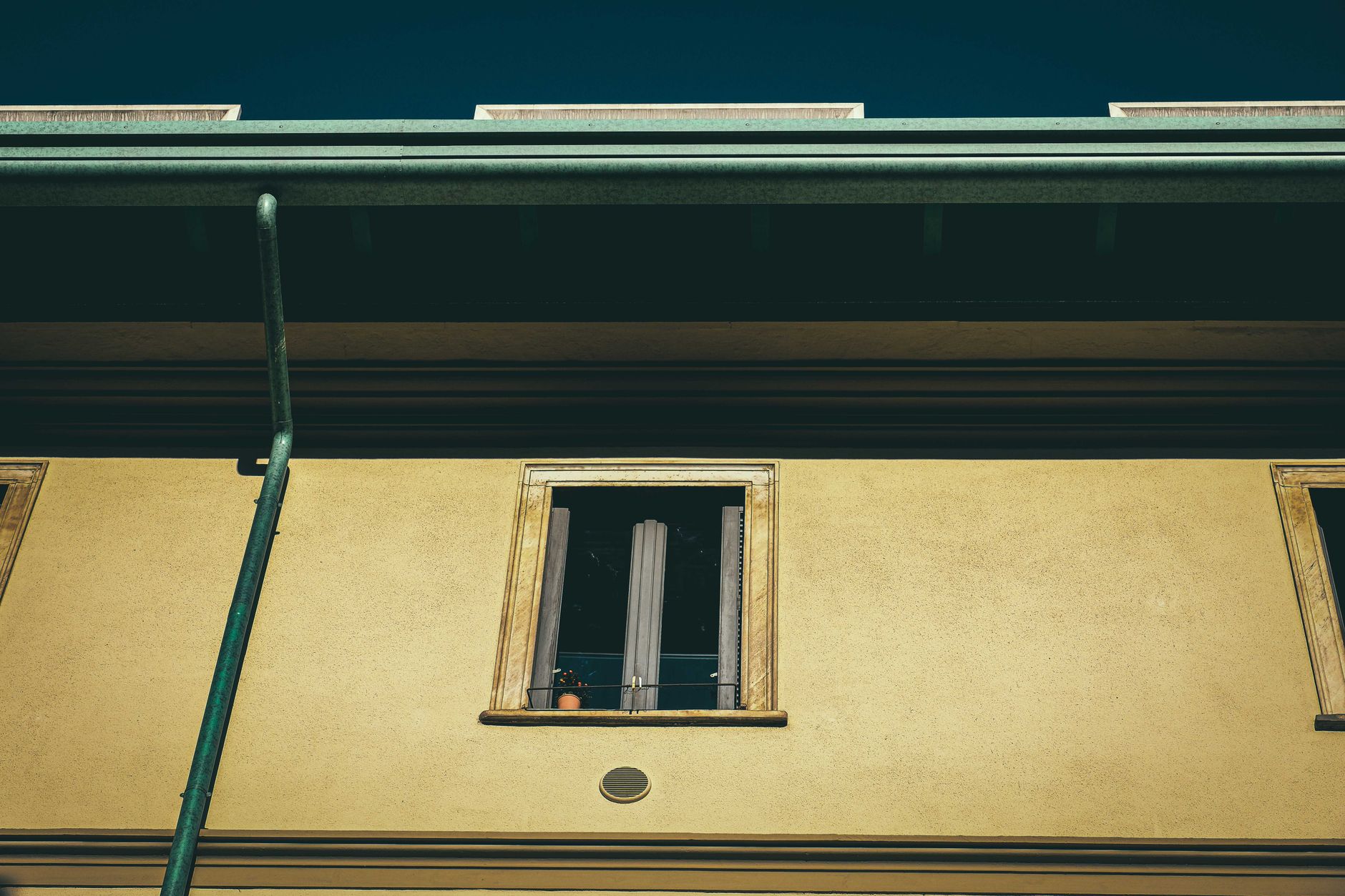
Gutters trace the roof edge, but downspouts cross the walls below. Their route can either follow an existing corner or interrupt a prominent surface.
A downspout may blend better when its finish relates to the wall behind it, even if the gutter follows the fascia color. Alternatively, a coordinated metal finish can make the whole system read as one exterior detail.
Check the route from several viewpoints. Consider front approaches, patios, window sightlines, and side-yard access. Avoid placing elbows where they interfere with gates, equipment, or future maintenance.
A visually hidden route is not automatically suitable. The location still needs to drain the gutter and reach a safe discharge destination.
Use actual samples in outdoor light
Screens and printed charts are useful for narrowing options, but they cannot fully represent installed color. Ask for physical samples of the exact finish being considered.
View them against the fascia, wall, and roofing in more than one lighting condition. Consider how shadows and reflected light change the relationship.
If the property has an association or architectural review process, obtain the required approval before ordering. A general color description may not be enough; the application may need a manufacturer name, finish identifier, profile, and marked elevation.
Homeowners can also use the company's gutter installation gallery to compare how different rooflines and finishes appear together. Photographs are references, not a guarantee that a finish will look identical on another house.
Think through future exterior changes
If roof replacement or painting is planned soon, coordinate the specifications. Otherwise, a gutter selected for an old trim color may conflict with the updated palette.
Consider material compatibility as well as appearance. A natural copper accent should be evaluated with the surrounding roof and flashing materials. A painted metal system should have a clear finish specification and appropriate maintenance instructions.
For a hypothetical home changing from warm beige trim to a cool white exterior, the most efficient decision may be to finalize the paint palette first and order gutter samples afterward. That prevents two trades from making separate color assumptions.
Preserve performance while refining appearance
A downspout should not be removed merely because it interrupts symmetry if it serves a needed drainage zone. Similarly, hiding a long run behind decorative construction should not make inspection or cleaning impractical.
Ask for a simple drawing that combines the visual layout with outlet destinations. This helps the homeowner see where design preferences and drainage needs must be reconciled.
Before installation, confirm the material, profile, finish, visible fasteners, downspout routes, and any approved substitutions in writing.
Review the layout on a marked elevation
Before approving the order, ask for photographs or a simple elevation marked with the proposed gutter runs and downspout positions. Add the selected finish names so the installer and homeowner are reviewing the same combination.
Look at the drawing from the perspective of someone approaching the property. Check whether a downspout crosses a feature the owner wants to emphasize or creates an awkward line beside a window. Then review the same location for collection, discharge, access, and attachment. This keeps visual preferences connected to a workable installation.
If several routes appear possible, ask the installer to explain the practical tradeoffs. A straighter visible route may be easier to inspect than a concealed arrangement with several offsets. The final choice should reflect the house and drainage requirements rather than a rule that every pipe must be hidden.
Confirm the small details that affect the finished appearance
Color is only one visible part of the system. Corners, outlet transitions, straps, elbows, and connections to existing components can also influence whether the work looks coordinated.
Ask which of those details are included in the approved finish and which may differ. If a particular accessory is unavailable in the selected color, discuss the alternative before installation day. An unexpected mismatch can be more noticeable than a small difference between two proposed gutter shades.
For a hypothetical stucco home with dark trim, the owner might select dark horizontal gutters and wall-colored downspouts. Mark the transition clearly so the crew does not assume the whole system should use one finish. Keep the approved sample identifiers with the proposal.
Also confirm how future touch-ups or component replacement would be handled. Product identifiers are more useful than remembering that the color looked close to bronze. A small record of the original selection can simplify later maintenance.
At the final walkthrough, view the work from the same positions used during planning. Check that approved routes, finishes, and visible details match the agreement. If an adjustment became necessary in the field, make sure it is recorded. This review gives appearance the same attention as drainage while keeping both tied to the original scope.
Exterior design questions
Should gutters always match the roof?
No. Matching the fascia, trim, wall, or an established accent can also work. The choice depends on which lines the owner wants to emphasize.
Can gutters and downspouts be different colors?
Yes, if compatible products are available and the combination suits the elevation. Confirm the specific finishes before ordering.
Will a darker color improve gutter performance?
Color is primarily an appearance and finish decision here. It does not replace correct sizing, attachment, movement details, or maintenance.