Nepal has two very contrasting aspects for experiencing the Himalayas: climbing a snowy peak and trekking through remote valleys under towering mountains. Choosing between Lobuche Peak Climbing and the Manaslu Circuit Trek involves more than just altitude. It’s all about technical skill, stamina, cultural interests, and what type of challenge one desires.
Lobuche East is at 6119m and is a first introduction to the challenges of mountaineering. The Manaslu Circuit Trek climbs to 5106 metres at the Larkya La Pass, which takes you through the traditional villages, rugged terrain, and lesser-known areas of the Himalayas. They both need preparation, but it is a very different experience to get to their peak.
Two Himalayan Adventures, Two Different Challenges
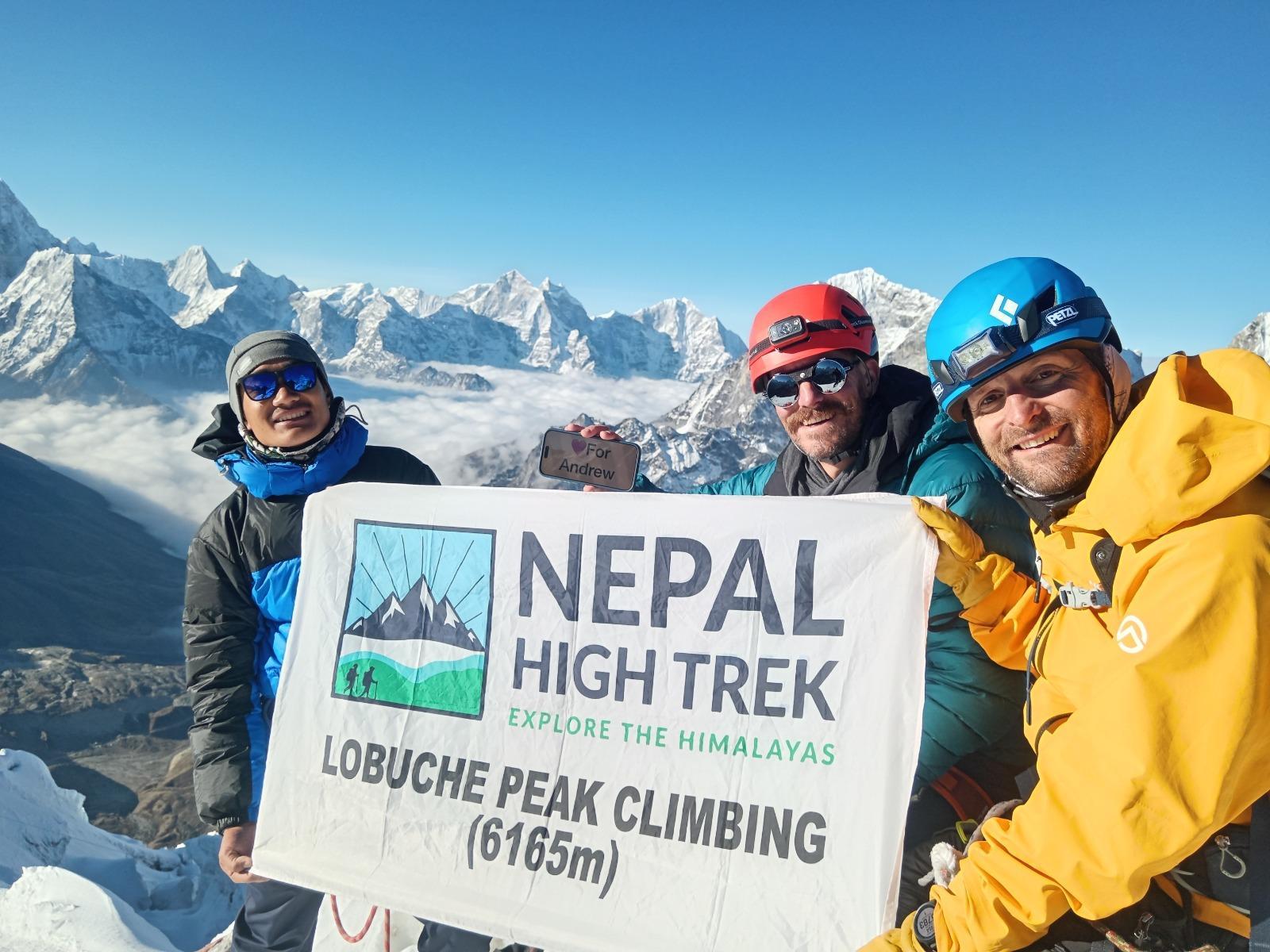
Lobuche Peak climbing is a mixture of trekking and a true climbing goal. The journey follows Everest region trails before preparing for the final summit push. En route, mountain communities give way to rugged alpine landscapes, leading to the climbing environment.
The rhythm of Manaslu is different. The traditional route winds through river valleys, forests, traditional villages, and ever more spectacular mountain scenery. Tibetan influences enrich the trip through the communities, monasteries, and the grand perspective of Mount Manaslu.
It’s easy to see the difference—Lobuche is a technical summit; Manaslu is a high-altitude circuit. Neither of these are to be taken lightly.
Lobuche Peak Climbing: The Challenge of Reaching 6,119m
Approaching Lobuche East on the Everest Trail.
Reaching Lobuche East is a key part of the adventure. As the hikers follow the trekking routes to the Everest region, they go through mountain villages and under some of the most famous mountains in the Himalayas. The method offers chances to acclimatize prior to the start of the climb.
But just because you get to the base of the mountain doesn’t mean you’re ready to go up the mountain. The weather may be colder, the days are longer, and the air is thinner, all of which can impact performance, as well as any fatigue that has built up. Climbers should try to save their energy and not race on each day of the trek.
From Trekker to Mountaineer: Technical Skills and Difficulty
The technical skill and difficulty from a trekker to a mountaineer. The summit of Lobuche East requires technical climbing, making it a more difficult trek than a standard trek. The climbers need to be ready for steep terrain, snow and ice, and the use of mountaineering equipment under appropriate guidance.
The skills required for a summit attempt are not necessarily acquired from previous trekking experience. Knowledge of crampons, ice axe, fixed ropes and safe movement on snow may be required depending on the conditions.
Lobuche East is a good introduction to mountaineering but is no easy ascent. Physical fitness, appropriate equipment, acclimatization, and experienced climbing support all help to make the climb a safer one. Snow, ice, and exposure are the Summit Push. The Summit Push is snow, ice, and exposure.
The Summit Push: Snow, Ice, and Exposure
Oxygen levels are much lower at 6,119 metres, and normal physical activities can be very demanding. The cold, wind, fatigue, and the changing nature of the snow can make it difficult.
It is not guaranteed that the summit will be possible on a specific day. It’s important for climbers to listen to their guide’s judgment of conditions, and to be willing to retreat when conditions are unsafe. It’s a great feeling to reach the top, but it’s also a great feeling to have made good decisions all the way up.
Manaslu Circuit Trek: A Journey into Remote Himalayan Landscapes
The picturesque mountain landscapes, the villages, and their culture are beyond the crowds.
The Manaslu Circuit Trek suits those who want a longer wilderness adventure without technical climbing. Its landscapes vary along the way, from river valleys and forested slopes to open alpine areas near the high pass.
Local villages like Lho, Samagaon, and Samdo offer moments of glimpses of local traditions and Tibetan-influenced mountain culture.
The route is not just about the physical journey but also offers a glimpse into the culture, traditions, and history of the region, through the presence of monasteries, prayer flags, traditional houses, and the view of Mount Manaslu.
Instead of just one peak, trekkers enjoy a series of scenery and communities. Crossing Larkya La Pass at 5,106 metres is the main highlight of the Manaslu Circuit Trek and one of its most demanding challenges.
The crossing usually starts early, with the trekkers passing through cold weather and rough terrain before reaching the end of the crossing at Bimthang. It can be a tiring day, especially when snow and icy terrain slow your progress. Use of the right boots, trekking poles, warm clothing, and a knowledgeable guide can help.
Larkya La is not a technical climbing peak, but rather a trekking pass, as is Lobuche East. However, it must be respected due to its height and the variations in its conditions. Walking at a good speed is not enough to overcome the dangers of altitude.
Altitude, Acclimatization, and Physical Preparation
Manaslu is a trek that requires a number of days to traverse at higher and higher altitudes. The route is not as technically demanding as Lobuche East, but the physical exertion can be quite high, especially in the approach to Larkya La.
Acclimatization is a process and must be done gradually. Trekkers should give their bodies time to acclimatise, listen to their guide’s instructions, and tell them if they experience any symptoms, e.g., increasing headache, nausea, dizziness, or unusual breathlessness. If symptoms are severe or worsening, it is important to assess them quickly and may necessitate a descent.
Regular hikes, stair climbing, biking, or any aerobic activity can enhance endurance. Good fitness cannot prevent altitude sickness, so a well-planned itinerary remains essential.
There are differences in the two adventures in terms of height, difficulty, lodging, and enjoyment. Here’s a quick comparison of the primary differences.
Lobuche Peak Climbing vs. Manaslu Circuit Trek: A Practical Comparison
The two adventures differ in altitude, technical requirements, accommodation, and overall experience. This quick comparison highlights the main distinctions.
Lobuche Peak Climbing vs. Manaslu Circuit Trek at a Glance
| Feature | Lobuche Peak Climbing | Manaslu Circuit Trek |
| Typical duration | 15 days | 14 days |
| Maximum altitude | 6,119m | 5,106m |
| Main activity | Technical peak climbing | High-altitude trekking |
| Physical demands | Strenuous, with technical climbing | Sustained walking and a high-pass crossing |
| Accommodation | Tea houses and camping, depending on itinerary | Mountain lodges and tea houses |
| Best seasons | Spring and autumn | Spring and autumn |
| Main highlight | Reaching a Himalayan summit | Crossing Larkya La Pass and exploring remote villages |
Durations and arrangements vary by itinerary, weather, acclimatization needs, and transport.
Altitude and Physical Difficulty
The pass of Lobuche East is 6,119 metres and the pass of Larkya La Pass is 5,106 metres. Lobuche is a higher objective and more difficult in terms of altitude, but that is not the only factor that makes it difficult.
Lobuche also adds the technical aspect of mountaineering to the physical. Manaslu is all about trekking for extended periods, long walking hours, steep inclines and declines, and a difficult high pass traverse.
You should choose the one that you have used in the past. Trekkers who are interested in mountaineering must evaluate their technical ability and for those who are opting for the Manaslu trek, they must be ready for consecutive days of walking at high altitude.
Time, Cost and Satisfaction
There is a time element involved in both adventures, and a preparation process as well as a travelling phase. Lobuche climbing packages typically consist of a specific climbing segment and other logistics. The cost of Manaslu depends on the tour package, the number of people on the tour, the type of accommodation, the transportation, permits, and the guide service.
When making a booking, check out what both adventures include. The cost of climbing gear, technical assistance, food, lodging, permits, and emergency plans may all impact the total budget. It is not always true that the lower the advertised price, the lower the overall trip cost.
Permits, guides and plans
Each adventure needs to be planned in advance, with different logistics involved. To climb Lobuche Peak, the appropriate peak climbing permit and mountaineering support are required. Manaslu is situated in a restricted area of trekking, and a special permit is needed, along with a licensed trekking guide organized by an authorized trekking agency.
Review up-to-date regulations, insurance requirements, emergency evacuation plans, and road conditions prior to departure. Permit requirements and fees may vary; please check for your travel dates.
What Himalayan adventure is for you?
Lobuche Peak Climbing is a Mountaineering Challenge for you.
If your primary goal is to climb to a Himalayan peak and you’re willing to build up the technical skills, you should go to Lobuche East. It is especially attractive to those who are looking to take the next step in their mountaineering goals.
It’s not just about getting to the top. It demands patience, preparation of equipment, acclimatisation, and a good sense of judgement in adapting to changing conditions.
Opt for Manaslu Remote Trekking for a remote trek.
If you are looking for a long-distance walk, cultural experience, remote villages and a diverse mountain landscape, then select Manaslu. Still, it’s a trip that requires preparation and stamina, but not a technical ascent. It is also a place of interest for those who like to explore the culture and environment of the Himalayas while visiting the traditional villages.
Conclusion: Summit Ambition or Wilderness Exploration?
Both Lobuche Peak Climbing and Manaslu Circuit Trek have their own advantages. The decision between them depends on your preferences for your Himalayan experience. Lobuche East is a technical climb with the opportunity to stand at 6,119 metres. Manaslu is a lengthy trek through mountains and traditional villages before crossing Larkya La Pass.
Both experiences are not necessarily superior. If you’re looking to climb, Lobuche might be a better option. For those looking for off-the-beaten-path trails, cultural experiences, and a challenging hike, Manaslu is definitely worth considering.
No matter which one you select, make sure you think about acclimatization, realistic fitness, local experience and trail safety. The most important thing in the Himalayas is not just to get to the top. It is making its way with sense and a greater understanding of the mountains.
We’re Nepal High Trek And Expedition Pvt. Ltd., based in Kathmandu, specializing in treks, climbs, and more for solo travelers and private groups.
Contact us at [email protected] or WhatsApp +977 9851142116.