The right boat is rarely the largest, fastest, or most feature-packed option. It is the one that works for the trips you will actually take, the people who will join you, and the water you use most often. Before comparing boats for sell, define what a normal day on the water looks like for your household.
A buyer who mostly fishes quiet coves has different needs than a family that spends summer weekends swimming, towing a tube, and sharing lunch aboard. Choosing regular habits rather than a once-a-year dream trip helps prevent an expensive mismatch.
Start With Your Typical Use
List the activities that will fill most of your boating season. Common priorities include fishing, family cruising, swimming, tubing, wakeboarding, exploring shorelines, or occasional overnight travel. Be honest about the usual crew, too. A couple fishing twice a month can make a different choice than a family of six bringing coolers, pets, towels, and water toys.
Buyers considering used boats for sale should apply the same filter. A well-kept pre-owned boat that suits everyday use can be a better long-term choice than a newer boat with features that rarely get used.
Compare Boat Types by Activity
Every boat design involves trade-offs among deck space, passenger comfort, weather protection, storage, shallow-water access, and speed. Understanding those compromises makes the comparison process clearer.
Fishing Boats
Fishing-focused boats commonly prioritize casting space, rod storage, livewells, trolling-motor compatibility, and access to shallow areas. Those benefits may leave less room for lounge seating or social gatherings.
Pontoons, Bowriders, and Deck Boats
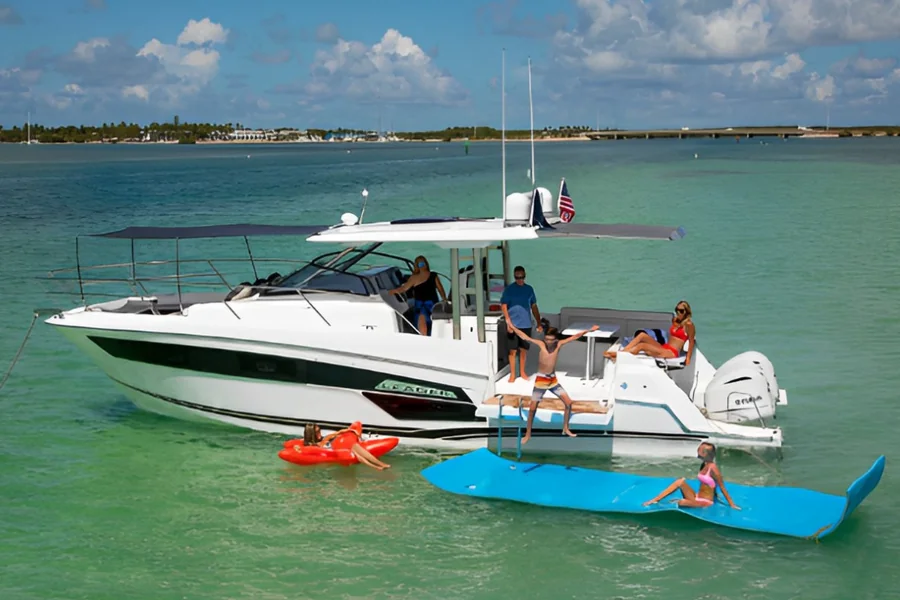
Pontoons offer open floor plans and generous seating, making them well-suited for relaxed family outings, swimming, and light fishing. Bowriders and deck boats often offer a versatile layout for cruising and watersports, but buyers should carefully compare storage, seating, shade, and available engine power.
Fish-and-Ski Boats, Center Consoles, and Offshore Boats
Fish-and-ski models aim to blend recreation with fishing utility. Center consoles provide open deck access and strong visibility around the helm, while larger offshore-oriented boats are built for more demanding water. They can also require more fuel, storage space, towing capacity, and operating experience than a casual lake boater needs.
Consider Local Water Conditions
A boat suited for a protected lake might not be ideal for larger reservoirs, fast rivers, or coastal waters. Small lakes favor easy launching and maneuverability, while larger, exposed waters demand attention to hull design, freeboard, range, navigation gear, and weather. Weather forecasts from the National Weather Service are crucial for understanding wind, waves, and changing conditions before heading out.
Check Space and Comfort
Capacity labels matter, but a legal passenger number does not guarantee a comfortable day aboard. Consider where people will sit while underway, where life jackets and bags will go, whether passengers can move safely, and how gear changes the usable space. A family may reasonably choose a slightly larger layout when the regular load includes children, a dog, a cooler, fishing equipment, and inflatables.
Review Engine and Trailer Needs
Engine choice impacts boat performance, fuel use, and handling. Ensure it has enough power for passengers, gear, watersports, and check local service availability. Confirm fuel range matches your trips. Also, evaluate the trailer fit, towing capacity, and inspect tires, brakes, bearings, lights, winch, and frame. Measure home storage first.
Choose New or Used
New boats can offer current layouts, warranty coverage, and more choices in options. Used boats may lower the purchase price and leave more room in the budget for equipment or upgrades. Neither route is automatically better. Condition, maintenance history, equipment function, and likely repair needs are more important than age alone.
Plan for Ownership Costs
Build a budget that reaches beyond the purchase price. Include financing, insurance, fuel, registration, routine engine service, cleaning supplies, safety equipment, seasonal storage or winterization, launch fees, marina costs, and trailer maintenance. Set aside a separate repair reserve, especially when purchasing a pre-owned boat.
Inspect Before Buying
Inspect the hull for visible damage, repairs, blisters, or uneven surfaces. Check the flooring, upholstery, compartments, hardware, electronics, pumps, lights, gauges, steering, batteries, and the trailer. Review available service records and engine-hour information. An on-water test can reveal ride quality, acceleration, visibility, vibration, noise, and handling issues that are not apparent on a trailer. For a used purchase, a qualified marine inspection can provide added confidence.
Put Safety First
Safety equipment and operator preparation belong in the buying decision, not as an afterthought. Review capacity information and applicable state requirements, then equip the boat with properly sized life jackets, navigation lights, a sound-producing device, an anchor and rode, a first-aid kit, and required fire protection where applicable. The U.S. Coast Guard’s recreational boating guidance also covers education, float plans, life jackets, and other operator responsibilities.
Common Questions About Choosing a Boat
What is the best boat for a family?
The best choice depends on the usual passenger count, local water, storage needs, and the activities the family enjoys most. Prioritize comfort for the normal crew, not maximum advertised capacity.
Should a first-time buyer choose a smaller boat?
A smaller boat can be easier to trailer, launch, store, and handle. It should still have enough space and power for the owner’s regular passengers and planned use.
How important is an on-water test?
It is one of the most useful parts of the buying process because it shows how the boat actually rides, turns, accelerates, and functions with people aboard.
The best boat for 2026 is the one that fits real routines, local conditions, passenger needs, towing limits, and a complete ownership budget. Take time to compare those practical details, and the result is more likely to be safe, comfortable, and enjoyable for years to come.