
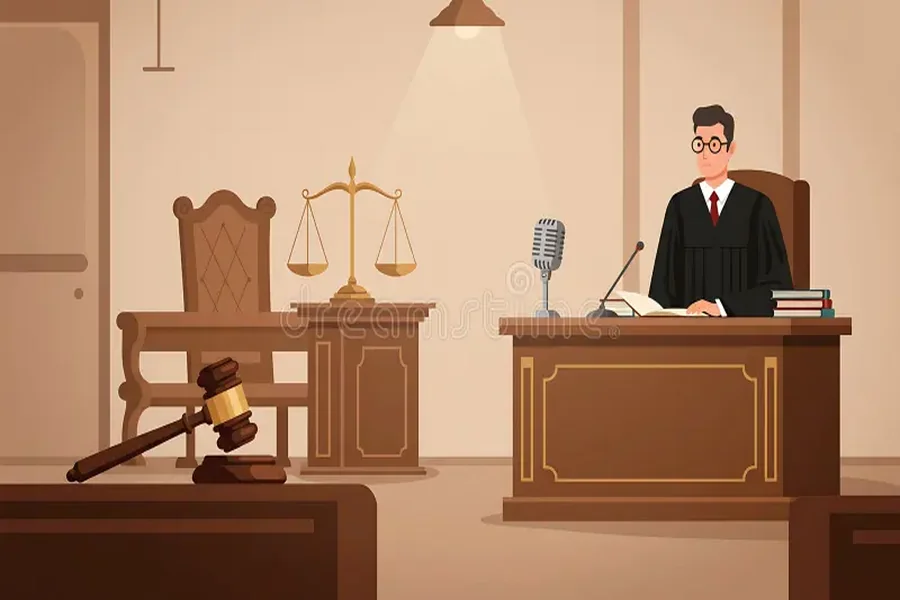
My neighbor Dean has watched every episode of his favorite legal drama twice, and he still calls a judge “Your Honor” when he spots one at the grocery store. Here is what surprised me: our culture has quietly outsourced its entire education about courtrooms to writers who have never set foot in a courthouse locker room. That’s a problem when your only reference point for a real case is a scripted show with a budget for dramatic lighting.
So let’s trace where your picture of a courtroom actually comes from, then separate the drama from the paperwork. If you ever need real help, a domestic violence attorney columbus ohio is a much better source of truth than any network procedural, and that gap between fiction and function is the whole point of this piece. By the end you’ll know which instincts to trust and which to throw out.
Why courts became Hollywood’s favorite setting
Courtrooms are cheap sets with high stakes. Two people argue, a third person decides, and someone’s life changes before the credits roll. It’s a story machine that runs on pure conflict.
That wasn’t always true. The Smithsonian has documented how early twentieth century entertainment leaned on theater and vaudeville before cinema turned spectacle into mass media, and the courtroom gave silent filmmakers a free stage. No car chases required. Just a table, two chairs, and a verdict.
Then television made it weekly. Once a show needed fifty-two episodes a year, writers needed a conflict generator that could run forever. Courts delivered. And because TV taught a couple of generations what justice looks like, the fiction hardened into folklore. We started assuming trials are the default, lawyers do all the talking, and the truth always surfaces by the final scene.
None of that holds up in an actual courtroom, and I’d argue the gap matters more now than it did in 1960, because that folklore is the only legal training most people ever get.
What TV gets right, and what it invents
Some of it is accurate. Yes, there’s a judge. Yes, two sides present their cases. Yes, evidence matters and witnesses get questioned.
The rest is theater, and here’s where I’ll say it plainly: I’d rather watch a ten minute documentary about a real docket than another season of a glossy legal drama. The fiction is fun. It’s just not a manual.
Here’s what I’d flag if I were handing you a cheat sheet:
- Real cases end in plea agreements far more often than in trials, and that outcome is deliberately unglamorous.
- Objections get raised constantly and sustained rarely, which makes terrible television.
- Most of the work happens in rooms without cameras, negotiating stipulations and reading discovery.
- Timelines stretch across months, not a single packed episode.
The formats themselves tell you something about the appetite. The Library of Congress preserves thousands of hours of early broadcast and film material, and you can see the courtroom genre settling into its formula early, then repeating it for a century. The formula stuck because it works, not because it’s accurate.
How fiction rewires your expectations before you ever need a lawyer
Every one of us builds a mental model of how institutions work long before we interact with one. Courtrooms get their model from screenwriters, and that model comes with defaults that can trip you up.
You walk in expecting to testify. In reality, many cases resolve without you saying a word in open court. You expect an instant answer. In reality, dates move and continuances happen.
You expect a dramatic monologue to win the day. In reality, a document filed three weeks earlier tends to decide more than any speech.
That gap matters most in cases with real consequences, where an accusation can flip your personal life and your job before any evidence gets weighed. Those are exactly the scenarios where borrowed TV logic costs you the most, and where a careful lawyer’s boring, procedural work does the heavy lifting.
This is the part I find genuinely important. A dramatized trial gives you a template. A real defense attorney gives you a strategy, and strategy usually looks like paperwork, patience, and knowing which motions actually matter. If your sense of the system came entirely from six seasons of network television, you’re working from a rough draft of the actual process, and rough drafts don’t belong anywhere near a real case.
That’s why people who do end up in that situation, and their families, need the story their own evidence supports rather than the story they absorbed from cable.
A quick reality check you can run on your own assumptions
Before you get pulled into any legal situation, real or hypothetical, try this. I’ve run this exercise with friends, and it works:
- Name the exact verdict you think would happen. Most people say trial.
- Ask yourself who you’d actually call first if it were real. If you can’t name anyone, you’ve been coasting on fiction.
- Write down what you’d do in the first twenty-four hours. If your plan starts with “get my moment in court,” erase it and start over.
- Check whether the person you’d call has actually handled a case like yours, not just appeared on a website.
That last question matters more than anything a script can teach you. The law firm category is like any other specialized field, built on paperwork, deadlines, and local rules you won’t find in a plot outline. Nobody expects you to become an expert on statutes. They do expect you to call someone who is.
My honest read after watching this cycle for years is that the entertainment is fine as entertainment. It’s just terrible as preparation. Keep the dramas on your DVR and get your actual information from people whose job involves real consequences for real people.
Where the audience side of this story is heading
Streaming didn’t kill the courtroom show. It multiplied it. Today there are legal podcasts, true-crime specials, and docuseries covering the same ground with slicker editing than any network could manage in the past.
The audience keeps growing, and the U.S. Census Bureau tracks a population that’s diverse, aging, and constantly changing, which should be a hint that a single on-screen version of a courthouse can’t represent everyone walking through a real one. Your actual court system is slower, messier, and built on rules that exist for reasons no script bothers to explain.
I don’t think we should stop watching. I do think we should stop believing.
So here’s the question worth sitting with. The next time you catch yourself trusting a TV version of a courthouse, ask whether you’d trust that script with your own future. If the answer is no, you already know the right move.