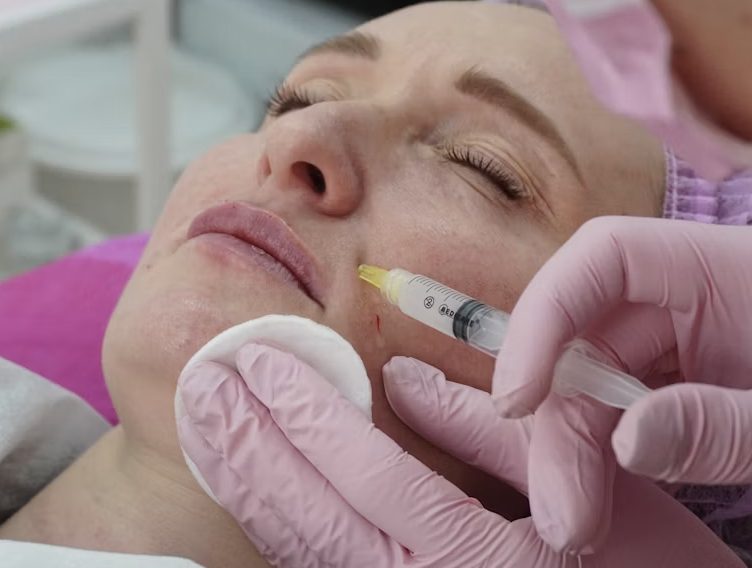
The most common Botox disappointment is not a bad injection. It is a correct injection applied to the wrong indication. Botox performs exactly as designed and the patient is surprised because what they wanted treated was not what the treatment mechanism addresses.
Botox works by temporarily reducing the activity of specific muscles that contribute to dynamic facial lines. Whether it is effective depends on what is causing the line in the first place. Muscle movement, skin elasticity, collagen loss, and the depth of an existing crease can all influence the result. This is why Botox Denver CO is considered in relation to facial anatomy and muscle movement rather than simply the location of a visible line.
A line that appears on the forehead, between the eyebrows, or around the eyes can therefore have a very different underlying cause. The important distinction is whether the wrinkle changes with muscle contraction or remains when the face is completely relaxed.
That difference tells you much more about whether reducing muscle activity is likely to change its appearance.
The Mechanism in One Sentence
Botox blocks acetylcholine release at the neuromuscular junction of the injected muscle. Without the signal, the muscle does not contract. A muscle that does not contract does not create the skin fold that produces the line.
This mechanism is specific to lines caused by muscle contraction. Lines caused by other mechanisms are outside the treatment’s scope regardless of how the injection is placed.
Dynamic Lines vs. Static Lines: The Distinction That Determines Everything
Dynamic lines form during muscle contraction and diminish when the muscle relaxes. On younger skin with good elasticity, they disappear at rest. Horizontal forehead lines when the brow raises. Vertical glabellar lines when frowning. Crow’s feet when squinting. These are dynamic lines.
Static lines are present at rest with the face fully relaxed and no muscle contraction occurring. Nasolabial folds. Marionette lines. Deep vertical forehead creases that remain visible when the frontalis is completely still. These form from volume loss, fat pad atrophy, collagen reduction, and gravitational change, not from muscle contraction.
Botox addresses dynamic lines. It does not address static lines regardless of dose, placement, or technique. A deep nasolabial fold that does not change with facial expression is a volume loss indication treated with hyaluronic acid filler, not a neurotoxin.
The Three FDA-Approved Facial Indications and What Each Requires
| Treatment Area | Primary Muscle | FDA Approval Year | Standard Dose Range |
| Glabellar lines (11s) | Corrugator supercilii, procerus | 2002 | 20 units across 5 points |
| Lateral canthal lines (crow’s feet) | Orbicularis oculi | 2013 | 12 units per side |
| Forehead lines | Frontalis | 2017 | 10 to 15 units |
The frontalis is the most technically demanding of the three because it serves a dual function. It creates horizontal forehead lines when it contracts. It is also the only muscle that elevates the brow. Complete frontalis relaxation eliminates forehead lines and drops the brow. The treatment target is partial relaxation that reduces line formation while preserving brow elevation.
This is why the same dose does not apply to every patient.
A patient with heavy brow tissue and a natural tendency toward brow descent tolerates less frontalis treatment than a patient with lighter tissue and higher resting brow position. The dose must be calibrated to the individual’s anatomy, not to a protocol.
What Happens to Results at Three Months
Botox results are temporary because nerve terminals regenerate. The blocked neuromuscular junction rebuilds acetylcholine release capacity over three to six months. Muscle contraction gradually returns as that regeneration completes. Treatment must be repeated to maintain the effect.
A systematic review in Aesthetic Surgery Journal found that the duration of Botox effect in the upper face was most strongly predicted by dose-to-muscle-mass calibration rather than by brand, concentration, or injection technique. Properly dosed treatment relative to the individual’s muscle mass produces results lasting three to four months. Under-dosed treatment produces results lasting six to eight weeks.
What Contraindications the Consultation Identifies
Absolute contraindications: Neuromuscular conditions including myasthenia gravis, Lambert-Eaton syndrome, and ALS. Pregnancy. Known hypersensitivity to any botulinum toxin product component.
Relative contraindications requiring assessment: Aminoglycoside antibiotics that potentiate neuromuscular blockade. Blood thinners that increase bruising risk. Active infection at the proposed treatment site.
A consultation that does not cover medical history, current medications, and prior treatment response before drawing product into a syringe is not a clinical consultation. It is a scheduling encounter.
Key Takeaways
- Botox blocks acetylcholine at the neuromuscular junction. It addresses dynamic lines created by muscle contraction only
- Static lines present at rest are caused by volume loss and collagen reduction. They require filler, not neurotoxin
- FDA approved Botox for glabellar lines in 2002, crow’s feet in 2013, forehead lines in 2017
- The 2022 Aesthetic Surgery Journal review found dose-to-muscle-mass calibration was the strongest predictor of result duration
- Frontalis treatment requires individual calibration because complete relaxation drops the brow while treating the lines
The anatomy determines what Botox addresses. Knowing the anatomy before the consultation determines whether the consultation produces the right treatment plan.