
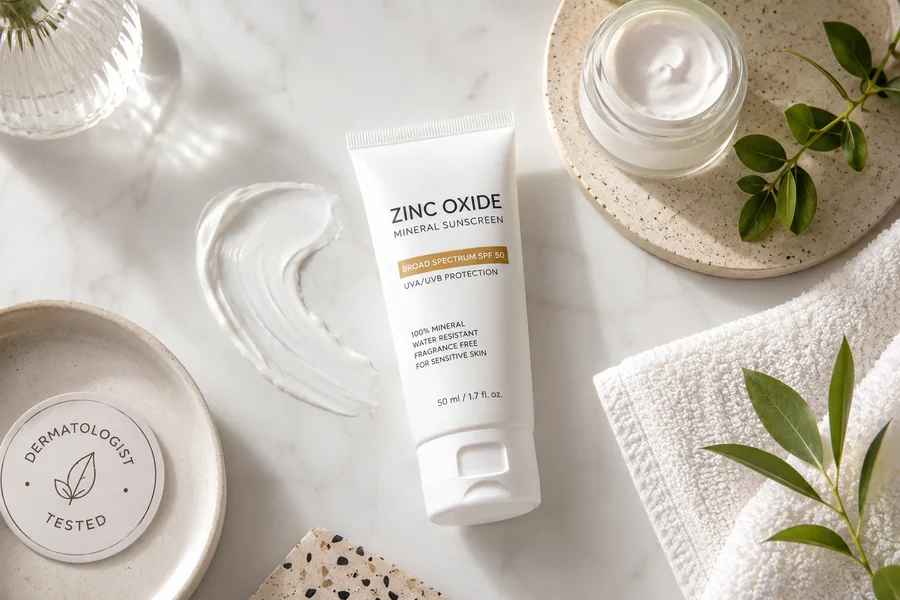
Sun care trends change quickly. One year it’s all about invisible textures, the next it’s reef awareness, skin barrier support, or minimalist formulas. Yet through all that product churn, one ingredient keeps holding its ground: zinc oxide.
That staying power is not an accident. Zinc oxide has earned trust over decades because it does something consumers and dermatology professionals both value: it provides dependable, broad-spectrum UV protection in a straightforward way. At a time when shoppers are reading labels more closely and asking harder questions about irritation, efficacy, and long-term skin health, that matters.
What makes zinc oxide especially interesting is that it appeals to more than one kind of sunscreen user. People with sensitive skin often seek it out. Parents recognize it from baby sunscreens. Outdoor enthusiasts like its reliability. And increasingly, everyday consumers who want a simpler routine are choosing zinc-based formulas because they understand what they’re getting.
What Makes Zinc Oxide Different?
Broad-spectrum protection is built in
Not all UV filters behave the same way. Zinc oxide stands out because it offers broad-spectrum coverage against both UVA and UVB rays. That’s a major reason it continues to be so widely respected.
UVB rays are often associated with sunburn, while UVA rays penetrate more deeply and are closely linked with photoaging and cumulative skin damage. A sunscreen that only tackles one side of that equation leaves a gap. Zinc oxide’s value lies in its ability to address both, which helps explain why it remains a go-to ingredient in formulas designed for daily wear as well as outdoor use.
That broad coverage also makes formulation strategy simpler. Rather than relying on a complicated mix of filters to fill protection gaps, zinc oxide can serve as a strong foundation on its own or alongside other ingredients. For consumers, that often translates into labels that feel easier to understand.
It has a long history of use
Trust in skincare is rarely built overnight. Zinc oxide has been used in topical skin applications for generations, not just in sunscreens but in products designed to calm and protect compromised skin. That history matters because familiar ingredients tend to inspire confidence, especially when people are applying them regularly and in significant amounts.
Of course, familiarity alone is not enough. An ingredient can be traditional and still fall out of favor if it cannot keep up with modern expectations. Zinc oxide has remained relevant because new formulation technology has improved the cosmetic experience without changing the core reason people rely on it: consistent protection.
Why Consumers Keep Coming Back to It
It’s often well suited to sensitive skin
For many people, the sunscreen search becomes a cycle of trial and error. One formula stings around the eyes. Another causes redness. A third feels heavy enough to discourage reapplication. Zinc oxide frequently enters the conversation because it is commonly recommended for skin that is reactive, post-procedure, acne-prone, or otherwise easily irritated.
That does not mean every zinc sunscreen feels the same, or that every formula will work for every person. Texture, supporting ingredients, and finish all matter. Still, when consumers start looking for gentler options, zinc oxide is often one of the first ingredients they investigate. If you’re comparing different mineral zinc oxide sun protection products, it’s worth looking beyond the headline ingredient and considering how the full formula handles wearability, hydration, and skin tone compatibility.
It’s dependable in the real world
There is a practical reason zinc oxide remains trusted: it performs reliably when people need it most. On a beach, during a hike, or in everyday commuting, sunscreen has to do more than sound impressive on a label. It has to protect skin under ordinary, imperfect conditions.
Zinc oxide is valued in part because it is photostable, meaning it does not break down as readily when exposed to sunlight as some filters can. That stability supports consistent protection over time, assuming the product is applied properly and reapplied as directed. In other words, zinc oxide fits the kind of no-nonsense expectation people increasingly have from skincare: if you use it correctly, it should do its job without drama.
The Modern Zinc Oxide Formula Looks Different
There is one objection that still comes up whenever zinc oxide is mentioned: the dreaded white cast. And to be fair, older formulas often deserved that criticism. Thick, pasty textures made zinc sunscreens feel like a compromise, especially for people with deeper skin tones.
Formulation has improved significantly
Today’s better-formulated zinc sunscreens are a different story. Advances in particle dispersion, texture engineering, and tinting have made many products more wearable than their predecessors. Some are sheer enough for daily office wear; others use carefully balanced tints to offset chalkiness. That progress is one reason zinc oxide has moved beyond the “beach-only” category and into everyday skincare routines.
Still, not every formula gets this right. Consumers should judge products by performance on actual skin, not by marketing promises alone. A sunscreen can be mineral-based and still feel greasy, dry, streaky, or difficult to layer under makeup.
What to look for on the label
When evaluating a zinc oxide sunscreen, a few details matter more than trendy packaging:
- Broad-spectrum protection
- An SPF appropriate for daily use and extended outdoor exposure
- Water resistance if you’ll be sweating or swimming
- A texture and finish you’ll realistically want to reapply
That last point may be the most important of all. The best sunscreen is not simply the one with the most appealing ingredient story; it is the one you will use generously and consistently.
Why Trust Still Matters in Sun Care
Sun protection is one of the rare skincare habits where the payoff is both immediate and long-term. You may avoid a sunburn today, but you are also reducing cumulative UV damage that contributes to premature aging and, more importantly, skin cancer risk over time.
That is why zinc oxide continues to matter. It offers something consumers are increasingly hungry for: clarity. It is familiar without being outdated, effective without needing a complicated explanation, and versatile enough to meet modern expectations when formulated well.
In a crowded market full of bold claims, that kind of credibility stands out. Zinc oxide has remained a trusted ingredient not because it is trendy, but because it has consistently answered the most important question in sun care: can you rely on it? For millions of people, the answer is still yes.