
A burst pipe behind your laundry room wall doesn’t announce itself. It just quietly soaks your subfloor, creeps into the drywall, and by the time you smell the mildew, you’re already looking at a five-figure repair bill. The good news is that a $50 sensor sitting on your floor can catch it in minutes. The bad news is that most homeowners never install one until after disaster strikes.
Smart water monitors have moved well past gimmick status. They’re now a legitimate first line of defense for any home with aging pipes, a basement, or appliances that can fail without warning. This guide covers how they work, what separates a useful device from a useless one, and the one situation where no sensor in the world can replace a licensed plumber.
The Numbers That Should Make You Nervous
Most people think water damage is something that happens to other people’s houses. The data disagrees.
According to the U.S. Environmental Protection Agency’s WaterSense program, the average American household wastes 9,400 gallons of water per year from leaks alone, roughly equivalent to more than 300 loads of laundry down the drain. That’s not catastrophic flooding. That’s a dripping faucet, a failing toilet flapper, a slow weep from a supply line fitting under your sink.
Slow leaks are sneaky. They don’t trigger the panic response that a geyser under the kitchen sink does, so they run for weeks or months. By the time your water bill tips you off, you may already have mold behind the cabinet.
The financial stakes get sharper when you look at what happens after the water has already won.
What the Insurance Numbers Actually Tell You
Data from the Insurance Information Institute compiled by This Old House shows that 1 in every 67 insured homeowners files a water damage or freezing claim each year, with an average payout of $15,400 per claim. Water damage is the second most common reason for a homeowner insurance claim, trailing only wind and hail.
Two things about that number deserve your attention. First, $15,400 is an average, meaning plenty of claims land well above it. Second, that figure only covers claims that were filed. Gradual damage from a slow leak is often excluded from standard policies entirely, so the real out-of-pocket cost for undetected leaks is considerably higher.
Smart water monitors exist to shrink the gap between “leak starts” and “homeowner knows about it.” That gap is where almost all the damage happens.
How Smart Water Monitors Actually Work
There are two broad categories of devices worth knowing about.
Point-of-leak sensors are small, inexpensive pucks or strips that sit on the floor near appliances, under sinks, or beside water heaters. When moisture touches their contact points, they send an alert to your phone. Some sound a local alarm too. These are passive, meaning they tell you water is already present but don’t stop the flow.
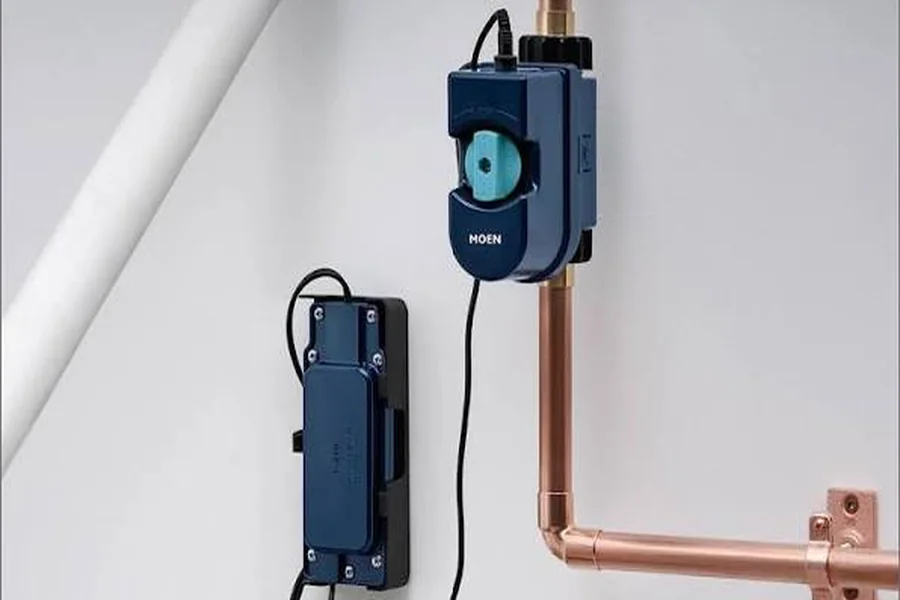
Whole-home flow monitors clamp onto or install inline with your main water supply line. They track flow data continuously and can detect anomalies, a sustained trickle that runs for three hours at 2 a.m., for example, and automatically shut off the water if they’re paired with an automatic shutoff valve. These cost more, typically a few hundred dollars including installation, but they’re the only type that can actually stop a pipe failure in progress rather than just report it.
The right choice depends on your risk profile. If you’re renting, traveling frequently, or just want to start somewhere, a handful of point sensors placed at high-risk locations handles most common failures. If you own the home, have older plumbing, or have already had a water event, a whole-home monitor is worth the investment.
The DETECT Framework: Where to Put Your Sensors First
Placement matters more than brand for point-of-leak sensors. The DETECT approach gives you a simple priority order for a typical house:
- D — Dishwasher and washing machine supply lines (appliance failures cause roughly 10% of sudden water damage events)
- E — Entry points from outside, including hose bibs and irrigation shutoffs in crawl spaces
- T — Toilets, particularly the supply line connection at the base of the tank
- E — Every water heater, both tank and tankless units, because pan overflows and pressure relief valve failures are silent until they aren’t
- C — Crawl spaces and basement floor drains
- T — Two spots under every sink, one near the drain and one near the supply shutoff
Work through that list and you’ve covered the locations responsible for the vast majority of residential water events. You don’t need a sensor in every room. You need them in the right six spots.
A Growing Market, and Why That’s Actually Good News for Buyers
Five years ago, smart water detection was a niche category with limited options and clunky apps. That’s changed quickly. The IMARC Group reports the global smart water leak detector market reached $1,367 million in 2024, driven by rising smartphone adoption, the spread of smart home ecosystems, and growing consumer awareness around water conservation.
More competition means better products at lower prices, and right now the category is genuinely competitive. Major platforms from Google, Amazon, and Samsung all support third-party water sensors natively, so whatever device you pick will likely talk to whatever smart home system you already use.
The one thing competition hasn’t solved is consumer inaction. Owning a sensor is not the same as responding to it.
When the Sensor Is Right and You Still Need a Plumber Fast
Consider this scenario. It’s a Saturday night and your whole-home flow monitor fires an alert at 11:47 p.m. The app shows water flowing at a high rate with no shutoff detected. You go downstairs and find water pushing through a joint in your main supply line. You can turn off the street valve, and you should. But you still have a broken pipe in your wall, a wet floor, and the kind of repair that requires permits and licensed hands.
This is where response time is everything. A sensor without a trusted plumber on call turns a 20-minute intervention into a 12-hour wait for Monday morning. Homeowners in Chatham County, for example, have access to Emergency Plumbing Services in Pittsboro NC that handle exactly this scenario.
The sensor catches the problem. The plumber fixes it. Neither one is optional.
Setting Up Your System the Right Way
A few practical things that most setup guides skip:
Test every sensor the day you install it. Fill a small cup with water, set the sensor in it, and confirm the alert fires on your phone before you trust it with anything real. Also, check your alert settings. Most apps default to quiet hours or notification bundling, which means a 2 a.m. alert might not wake you up. Turn off quiet hours for your water sensor specifically, treat it like a smoke alarm.
Replace batteries on a schedule. Most point sensors run on watch batteries or AA batteries with a two-year lifespan. Calendar it. A dead sensor is worse than no sensor because it gives you a false sense of security.
Finally, share access with someone else. If you’re out of town when an alert fires, you want a neighbor or family member who can also see the notification and check the property.
The Bottom Line
Smart water monitoring is one of the few home technology investments where the ROI case writes itself. A $50 sensor catches the $15,000 claim before it starts. A whole-home monitor shuts off your water before a pipe failure destroys your floors. And having a licensed plumber’s number already saved in your phone means that when the sensor is right, the response is fast.
The real question isn’t whether smart water monitoring is worth it. It’s how long you’re willing to wait before setting it up.