Fashion has spent years challenging narrow ideas of beauty. Runways and advertising campaigns have gradually made room for more body types, skin tones, ages and personal identities. Yet one aspect of appearance has often received less attention: hair.
For decades, fashion imagery has largely celebrated thick, healthy-looking hair as the default. Whether models wore sleek ponytails, voluminous curls or perfectly styled waves, the underlying expectation was often the same. Hair was something everyone was assumed to have, and preferably plenty of it.
That assumption doesn’t reflect the experiences of many women. Some have naturally fine or thinning hair, while others experience hair loss related to alopecia, medical treatment or hormonal changes. Different hair textures also bring their own styling requirements, which aren’t always considered in mainstream beauty campaigns.
A more inclusive approach to fashion means recognizing that women should have the freedom to wear their natural hair, use alternative hair products or embrace a completely bald look without feeling excluded from the conversation.
When Hair Becomes Part of the Inclusivity Conversation
The fashion industry’s understanding of representation has expanded considerably, but hair diversity involves more than featuring different hairstyles in advertising.
It’s about recognizing that women have different relationships with their hair. For some, styling is a creative outlet. For others, it can be a sensitive subject connected to personal identity, cultural expectations or changes in their health.
A woman with alopecia may feel perfectly comfortable appearing without hair, while another might prefer wearing a wig that resembles her previous hairstyle. Someone with naturally coily hair may want products and styling techniques designed specifically for her texture rather than being encouraged to straighten it.
None of these choices should be treated as more fashionable or acceptable than the others.
This is where inclusive beauty becomes meaningful. Instead of presenting one ideal appearance, brands and stylists can offer a wider range of options that allow women to decide how they want to look.
Fashion doesn’t need to determine whether someone should conceal hair loss or embrace it. It needs to make room for both.
How Fashion Campaigns Are Challenging Traditional Hair Standards
Several fashion and beauty initiatives have begun addressing hair differences more directly.
In 2023, UK-based wig brand Baldy Lox Boutique launched its To Enhance, Not Define campaign, featuring women with hair loss in a high-fashion editorial setting. Rather than presenting wigs solely as products for concealing a medical condition, the campaign highlighted personal style, individuality and the beauty of women with different hair loss experiences.
The approach was notable because it challenged the idea that hair loss must always be hidden before someone can participate in fashion.
More recently, fashion designer Christian Siriano collaborated with Sun Pharma on the Regrowth Restyled initiative, launched in September 2026. The campaign brought attention to adults living with severe alopecia areata and explored how clothing and personal expression can remain meaningful throughout changes in hair growth.
Siriano’s contribution included a fashion design informed by conversations with people experiencing the condition. The initiative demonstrated how fashion can engage with hair loss as part of a broader conversation about identity, rather than treating it as something unrelated to style.
These examples represent different approaches, but they share an important idea. Women experiencing hair loss deserve to be visible in fashion, whether they choose to wear alternative hair or not.
Hair Texture Deserves the Same Attention as Hair Loss
Inclusivity isn’t limited to women experiencing thinning or hair loss. It also involves recognizing the enormous variety of natural hair textures.
Straight, wavy, curly and tightly coiled hair can respond very differently to styling products, heat and manipulation. Yet beauty campaigns have historically tended to favour certain textures while expecting others to be altered to achieve a particular look.
Haircare brand amika addressed this broader conversation through its All Hair Is Welcome campaign, which celebrated individuality and a wider understanding of beauty.
For hairstylists, genuine inclusion requires practical knowledge as well as representation. Working with tightly coiled hair, for example, calls for different techniques from styling fine, straight hair. Product selection, detangling methods and the amount of tension applied during styling can all influence the finished result.
The same principle applies to wigs and extensions. A woman looking for a natural-looking alternative hairstyle may want a texture that closely resembles her own hair, not simply the most widely advertised option.
Providing a wider range of textures allows customers to make choices based on their identity and preferences rather than the limitations of a product catalogue.
Why Alternative Hair Is Becoming Part of Personal Style
Wigs, toppers and hairpieces have long served practical purposes, but they also offer opportunities for creative expression.
A woman might wear a wig to experiment with a different colour without dyeing her natural hair. Someone with thinning around the crown may prefer a lightweight topper that blends with her existing hairstyle. Another person may choose a full wig because it makes her daily routine more convenient.
For women experiencing significant hair loss, women’s hair replacement systems can provide additional styling options when natural hair coverage is limited.
These products can vary in construction, coverage and attachment methods, making it important to consider the wearer’s individual needs. A partial hairpiece designed to blend with existing hair serves a different purpose from a full-coverage wig intended for someone with extensive hair loss.
Comfort is also essential. Someone with a sensitive scalp or hair loss related to medical treatment may need to pay particular attention to cap construction, friction and attachment methods.
Not every option will suit every person, and alternative hair shouldn’t be presented as a requirement for looking fashionable. Its value lies in giving women more control over their appearance.
The broader fashion industry benefits when these choices are treated as ordinary parts of personal styling rather than something that needs to be concealed or explained.
What Hairstylists Can Do to Make Beauty More Inclusive
Fashion campaigns can influence perceptions, but hairstylists often have a more immediate impact on women’s everyday experiences.
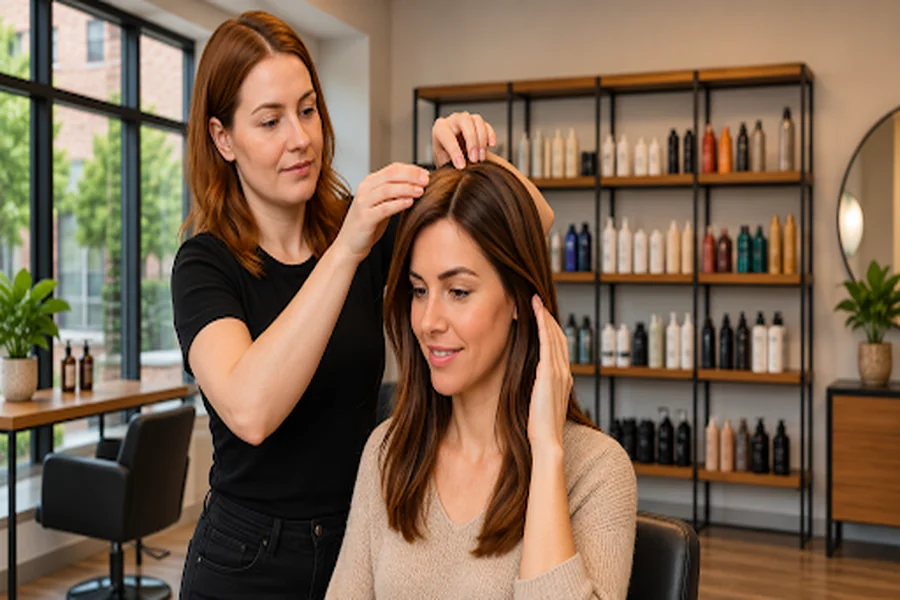
An inclusive salon experience begins with listening. Before recommending a haircut, colour treatment or hairpiece, a stylist should understand what the client wants to achieve and whether there are any concerns about scalp sensitivity, hair density or maintenance.
This becomes particularly important when working with clients experiencing hair loss.
A stylist may be able to suggest a haircut that improves the appearance of volume, explain how a topper could blend with existing hair or help a client explore different wig styles. They should also recognize when a concern requires medical assessment rather than a cosmetic solution.
Training matters as well. Salons that understand a wider range of hair textures and alternative hair products are better equipped to serve clients who have previously struggled to find suitable services.
Inclusivity isn’t simply about making every customer feel welcome when they enter a salon. It’s also about having the knowledge, tools and flexibility to provide a service that genuinely meets their needs.
Why More Choice Matters for Women Experiencing Hair Loss
Hair loss doesn’t affect every woman in the same way, and the products available should reflect that reality.
Some women experience gradual thinning around the parting or crown. Others may have more extensive hair loss that changes how they approach everyday grooming. Personal preferences also vary considerably, from those who want their replacement hair to resemble their previous hairstyle to those who enjoy experimenting with different looks.
This variety creates an opportunity for alternative hair brands to think beyond a limited selection of standard styles.
TopUnique offers women’s hair replacement options for different coverage and styling needs, reflecting the importance of giving customers choices rather than assuming that one type of wig or hairpiece will suit everyone.
The most useful considerations include the amount of coverage required, how the hairpiece will be worn, the desired hair texture and the maintenance involved. A woman looking for subtle volume around the crown may have very different priorities from someone who needs full coverage.
The objective shouldn’t be to promise that every product will look or feel the same on every wearer. Instead, brands can help customers understand the available options and make decisions that suit their circumstances.
That practical approach is an important part of inclusive beauty. Representation matters, but so does making suitable products easier to understand and access.
The Difference Between Representation and Real Inclusion
Featuring a model with alopecia in a campaign can be a meaningful step, but representation alone doesn’t guarantee that a brand has become more inclusive.
The experience surrounding the product matters just as much as the imagery.
A fashion or beauty company might celebrate diverse appearances in advertising while offering little information about products suitable for different hair textures or sensitive scalps. Similarly, a salon may describe itself as inclusive without having staff trained to work with alternative hair or a wide range of natural textures.
Real progress requires practical changes.
Brands can show products on women with different hair conditions, explain how hairpieces are fitted and maintained, and avoid suggesting that hair loss automatically needs to be corrected. They can also offer clearer information about materials, sizing and styling limitations.
Fashion imagery should reflect choice rather than prescribe it. A bald model, a woman wearing a colourful wig and someone using a discreet topper can all represent different forms of personal expression.
The goal is not to replace one beauty standard with another. It’s to move away from the expectation that everyone should approach their appearance in the same way.
A More Inclusive Future for Fashion and Beauty
The relationship between fashion and hair is changing, even if progress remains uneven.
Campaigns addressing alopecia, greater attention to natural hair textures and the growing visibility of alternative hair all suggest a broader understanding of personal style. Women are increasingly being represented through different experiences rather than one narrow image of what fashionable hair should look like.
There is still work to do, particularly when it comes to product accessibility, professional training and the representation of women whose hair doesn’t fit conventional beauty expectations.
But the direction is encouraging.
Fashion is at its best when it gives people more ways to express themselves. That might mean wearing natural curls, choosing a short haircut, experimenting with a wig or confidently appearing without hair.
A truly inclusive beauty industry doesn’t decide which of those choices is right. It makes sure women have the freedom, information and support to choose for themselves.