
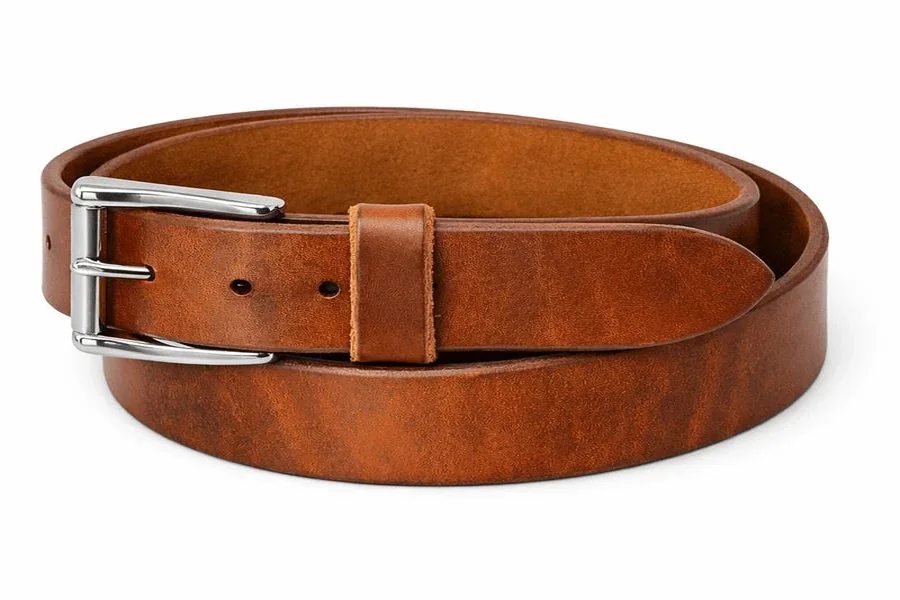
A warehouse employee who spends eight hours walking and lifting has different needs from a maintenance technician who carries equipment around the waist. Both might wear leather work belts, but the features that make those belts comfortable and dependable can be quite different. A stiff strap may provide useful support for one person while creating unnecessary pressure for someone who spends much of the day sitting, crouching, or climbing.
This is why choosing a work belt based solely on leather thickness or appearance can lead to disappointing results. A substantial leather strap and heavy metal buckle may suggest durability, but neither guarantees a comfortable fit or reliable performance under actual working conditions. The belt also needs to suit the wearer’s clothing, body movement, and equipment requirements.
A good work belt should keep trousers secure without requiring constant adjustment, maintain its shape under the demands of ordinary use, and remain comfortable throughout a shift. Achieving that balance requires attention to leather quality, strap dimensions, buckle construction, and fit. Understanding these features makes it easier to identify what genuinely matters for different jobs and avoid paying for unnecessary characteristics.
What Does a Good Work Belt Need to Do?
The primary function of a conventional work belt is straightforward: it keeps trousers securely positioned during movement. However, accomplishing this comfortably becomes more demanding when a person repeatedly bends, stretches, kneels, climbs, or moves between sitting and standing.
A belt must maintain enough tension to hold the waistband without pressing excessively against the body. It also needs sufficient flexibility to accommodate natural movement. If the strap is too soft, it may twist or deform when subjected to additional weight. If it is excessively stiff, it can create uncomfortable pressure around the abdomen and hips, especially during prolonged sitting.
The right balance depends on the work being performed. Someone working in a warehouse may need a belt that stays in place during frequent lifting and walking. A delivery driver may prioritize comfort when moving repeatedly between a vehicle and customer locations. A maintenance technician might need additional stability when carrying a tape measure or small utility pouch, provided the belt is designed to accommodate such accessories.
These differences make it important to identify the belt’s intended purpose before comparing individual features. A conventional leather work belt generally secures clothing and, in some designs, supports suitable lightweight accessories. A dedicated tool belt is designed around equipment carrying requirements and may incorporate specialized pouches, padding, or additional support.
The distinction is important because the ability to withstand weight does not necessarily mean a belt can distribute that weight comfortably or safely. Ordinary clothing belts and specialized equipment carrying systems should be evaluated according to their different purposes.
How Working Conditions Influence Belt Selection
The physical demands of a job should guide the selection of a work belt. Two people wearing similar trousers may require different levels of support, flexibility, and hardware protection because their activities expose the belt to different conditions.
In warehouse and logistics jobs, workers frequently alternate between walking, standing, lifting, and bending. A belt that maintains a secure adjustment without digging into the waist can be particularly useful. Moderate flexibility may be preferable to extreme rigidity because the wearer needs freedom of movement throughout the shift.
Delivery drivers face a different combination of movements. Frequent transitions between sitting and standing make buckle shape and strap comfort important. A bulky buckle may press against the abdomen while driving, even when the rest of the belt fits correctly. A relatively compact fastening system can make a noticeable difference when a worker spends several hours seated.
Construction and maintenance work introduce additional considerations. Work trousers often use substantial fabrics, and workers may wear accessories that create localized pressure around the waist. Outdoor occupations also involve environmental exposure, including rain, humidity, dirt, and repeated contact with abrasive surfaces. These conditions make leather care requirements and buckle corrosion resistance relevant considerations.
Work Belt Requirements by Occupation
| Working Environment | Main Priority | Features to Consider |
| Warehouse and logistics | Comfort during frequent movement | Flexible yet supportive strap, secure buckle, correct fit |
| Delivery and transportation | Comfort during prolonged sitting | Moderate flexibility, compact buckle, comfortable waist adjustment |
| General maintenance | Stable fit with occasional accessories | Suitable leather firmness, sturdy hardware, appropriate width |
| Construction and skilled trades | Compatibility with workwear and equipment | Substantial construction, secure fastening, separate equipment support when needed |
| Landscaping and outdoor maintenance | Regular movement and environmental exposure | Suitable leather finish, corrosion resistant hardware, manageable stiffness |
| Workshop and light industrial work | Consistent daily function | Reliable buckle, comfortable thickness, secure fit |
| Office and site work | Function with a professional appearance | Simple leather design, restrained hardware, moderate support |
These recommendations are general considerations rather than workplace safety specifications. Jobs involving specialized protective equipment, heavy tools, or fall hazards require appropriate equipment and compliance with applicable safety requirements.
The table also illustrates why there is no universally ideal work belt. A feature that benefits one occupation may offer little advantage in another. Buyers should begin by identifying their most common movements, working conditions, and clothing requirements rather than assuming that a heavier design is always preferable.
Which Leather Type Is Best for a Work Belt?
Leather remains a popular material for work belts because it can provide substantial construction, useful flexibility, and an appearance suited to traditional workwear. However, the properties of finished leather depend on the original hide, tanning, finishing, and manufacturing methods.
Full grain leather is often worth considering for regular use. It retains the original grain surface of the hide and can be manufactured into firm, supportive straps. Depending on its thickness and processing, it may provide the combination of flexibility and dimensional stability needed for everyday work.
However, not every full grain belt behaves identically. Some designs are relatively supple, while others are intentionally firm. These differences matter because a belt that feels comfortable during frequent bending may not have the same resistance to deformation as one intended for additional support.
Other leather types can also be suitable for work belts. Top grain leather, including corrected grain varieties, may offer dependable performance when properly manufactured. Split leather and bonded leather products have different construction characteristics, making it important to examine the finished strap rather than relying exclusively on material labels.
For workwear, the practical question is whether the leather has appropriate strength, flexibility, and resistance to unwanted deformation. A manufacturer that identifies the materials, approximate thickness, construction, and intended use gives buyers a stronger basis for comparison than one relying solely on descriptions such as premium or heavy duty.
The strap’s construction should also match the demands of the job. Some belts consist of a single substantial piece of leather, while others combine layers to achieve particular characteristics. Either approach can work when the materials and assembly methods are appropriate.
Instead of attempting to rank every leather classification, buyers should concentrate on whether the finished product provides the combination of support, comfort, and durability required for their working conditions.
How Thick Should a Leather Work Belt Be?
Thickness affects the way a leather belt responds to bending, tension, and additional weight. A thicker piece of otherwise comparable leather will generally resist bending more strongly than a thinner one. This can be useful when a worker needs a firm strap that maintains its shape throughout the day.
However, the relationship between thickness and performance is not as simple as choosing the largest measurement. Leather firmness, internal structure, and construction also influence how the strap behaves. Two belts of similar thickness can feel noticeably different, particularly when they use different types of leather or manufacturing methods.
Leather thickness is commonly expressed in millimeters, inches, or traditional leather weight units known as ounces. In leatherworking, one ounce corresponds to approximately 1/64 of an inch of thickness. An 8 ounce piece is therefore about 3.2 millimeters thick, while a 14 ounce piece is approximately 5.6 millimeters thick. These conversions are approximate, and actual dimensions can vary because leather is a natural material.
For ordinary workwear, a strap measuring around 3 to 4 millimeters may provide adequate structure when made from suitably firm leather. Substantial designs measuring approximately 5 millimeters or thicker may offer greater resistance to bending. These examples illustrate differences in construction rather than established performance standards. There is no universal thickness threshold that makes a belt suitable for a particular occupation or equipment load.
The appropriate choice depends on the wearer’s daily routine. Someone whose belt primarily secures trousers may value a strap that follows body movement comfortably. A worker carrying suitable lightweight accessories may prefer additional firmness to help limit twisting or sagging.
Thickness should therefore be considered alongside the intended application, rather than treated as an independent measure of quality.
Understanding Thickness, Firmness, and Width
These three characteristics are related, but they describe different properties.
Thickness measures the depth of the strap, usually in millimeters or inches. It influences the amount of material present and contributes to bending resistance.
Firmness describes how resistant the leather feels when bent or compressed. It depends on the material and its processing, meaning two equally thick belts can have different levels of flexibility.
Width measures the distance between the strap’s long edges. It determines how the belt fits through trouser loops and affects the area of contact against the waistband.
Many substantial leather work belts measure approximately 1.5 inches wide, a common dimension for jeans and work trousers. However, compatibility depends on the actual belt loops, and a wider strap is not automatically stronger or more comfortable.
Understanding these differences is useful when comparing manufacturer specifications. A belt may be wide but relatively flexible, or narrow but exceptionally firm. Its performance depends on how these characteristics work together.
Before purchasing, check both the dimensions and the manufacturer’s description of the intended use. If possible, examine the belt with the trousers normally worn at work, since an otherwise suitable design may be uncomfortable when combined with a particular waistband.
What Makes a Buckle Reliable for Work?
The buckle is among the most frequently used components of a work belt. It needs to maintain a secure connection while tolerating repeated fastening, movement, and contact with clothing.
A well constructed leather strap can still become inconvenient if the buckle loosens, catches on nearby objects, or presses against the abdomen during normal work. For someone who regularly sits, bends, or operates equipment, buckle dimensions may be just as important as the material.
Traditional prong buckles remain common because their operation is straightforward. A metal pin passes through a hole in the leather, creating an adjustable fastening point. When properly manufactured and paired with suitable leather, this arrangement can provide dependable everyday performance.
Roller buckles use a rotating component that helps the strap move through the fastening area. This design may reduce certain types of friction as the leather is tightened, particularly on substantial straps. However, the leather still bends around the buckle, and the fastening holes remain subject to repeated pressure.
Neither design is universally better. A conventional buckle may be entirely suitable for a person whose belt primarily secures trousers, while another worker may prefer the feel and operation of a roller buckle.
Buckle Materials and Attachment Methods
Common buckle materials include stainless steel, brass, steel, and other metal alloys. Stainless steel is often valued for corrosion resistance, particularly where moisture exposure is a concern. Brass is another established hardware material, while appropriately manufactured plated steel components can also serve everyday applications.
The specific alloy, design, and manufacturing quality influence performance. A material name alone does not guarantee that a buckle will withstand every intended condition.
The method used to attach the buckle deserves similar attention. Leather belts may use rivets, stitching, snaps, or threaded fasteners. Some designs allow buckles to be replaced, which can be useful when the leather remains functional but the hardware becomes damaged.
Chicago screws, for example, consist of mating threaded components that secure the folded leather around the buckle. Their removable construction can make buckle replacement practical, although the screws need to remain properly secured during use.
For workers exposed to frequent movement and occasional impacts, it is worth examining whether the buckle and its attachments feel solid and operate smoothly. Sharp edges, loose fasteners, or excessive movement around the attachment area may indicate a problem that deserves attention.
A compact, uncomplicated buckle is often a sensible choice when the wearer works in confined areas or spends considerable time sitting. Large decorative hardware can look attractive but may create unnecessary pressure or catch on clothing and equipment.
Why Comfort Matters During Long Shifts
A work belt may feel perfectly comfortable when first fastened and become increasingly irritating after several hours. The difference often reflects how the body and clothing move throughout the day.
Sitting changes the position and shape of the abdomen, while bending and reaching alter the tension around the waist. The waistband may shift as the wearer moves, and the belt must accommodate those changes without requiring constant adjustment.
An excessively tight strap can create uncomfortable pressure, particularly when combined with a bulky buckle. A loose strap may allow the trousers to shift, causing the wearer to tighten it repeatedly. The ideal fit provides enough tension to secure the waistband while leaving room for normal movement.
Trouser fit makes a substantial difference. A waistband that is considerably too loose may require excessive tightening, creating folds in the fabric and concentrated pressure around the waist. Conversely, trousers that already fit too tightly may become uncomfortable when a substantial belt is added.
The belt’s position also matters. Work trousers worn closer to the natural waist may place pressure on different areas of the body than styles sitting lower on the hips. Workers who frequently move between sitting and standing should consider whether their chosen trouser rise and belt combination remain comfortable in both positions.
Some leather straps gradually develop a curve corresponding to the wearer’s body. This adjustment can be part of normal wear, but severe initial discomfort should not be ignored in the expectation that the material will eventually become comfortable.
How to Test a Belt for Workday Comfort
A realistic fitting assessment should use the trousers normally worn at work. It should also account for any layers of clothing typically tucked into the waistband.
Instead of judging the belt while standing still, test it through several movements that reflect an ordinary working day:
- Walk and turn: The belt should keep the trousers secure without sliding excessively or requiring repeated adjustment.
- Sit comfortably: The buckle should not press sharply against the abdomen, and the strap should allow a normal seated posture.
- Bend and reach: The belt should remain secure without creating excessive pressure around the waist.
- Squat or kneel when relevant: Observe whether the buckle digs into the body or the waistband becomes uncomfortable.
- Check the adjustment: There should be enough strap remaining to pass neatly through the keeper, without an excessively long loose end.
This test is useful because many belt problems become apparent only during movement. A strap that looks appropriately sized while standing may create discomfort when sitting, while a belt that feels secure initially may shift when the wearer bends repeatedly.
Workers should also consider comfort after extended wear. An accessory that feels acceptable for a few minutes may behave differently during a full shift, especially when the job involves repetitive movements or long periods in one position.
How to Choose the Correct Work Belt Size
Belt sizing deserves careful attention because the size printed on trousers does not necessarily correspond to the correct belt measurement. Clothing manufacturers use different sizing conventions, and waist measurements can vary according to where the trousers are worn.
Some belt manufacturers recommend choosing a size several inches larger than the labeled pants waist, but the appropriate adjustment depends on the manufacturer’s system. Using a universal rule without checking the brand’s specifications can result in a belt that is too long or too short.
A more reliable approach is to measure an existing belt that fits comfortably and compare it with the new product’s sizing instructions. Manufacturers may define belt length using the distance between the buckle attachment and a designated fastening hole, so the exact measurement method should be confirmed.
A correctly sized work belt should fasten without excessive tension and leave enough strap to pass through the keeper. For many conventional designs, fastening near the middle of the available adjustment holes provides flexibility, although this varies according to the product.
If the belt must be pulled tightly to keep the trousers in position, the problem may involve the trousers rather than the strap. A significantly loose waistband can bunch beneath the belt and create uncomfortable pressure points. Properly fitting work trousers make it easier for the belt to perform its intended function.
For workers who wear substantial clothing layers during colder weather, it may also be useful to consider how those layers affect the available adjustment range. The goal is a secure fit that accommodates normal work clothing and movement without forcing the belt into an uncomfortable position.
What If You Need to Carry Tools or Accessories?
Carrying accessories changes the requirements placed on a work belt. Even a relatively small pouch can create localized downward force, causing the strap to shift or twist if its construction is unsuitable.
Some leather belts are designed to support appropriate everyday accessories. Others are intended primarily for holding trousers and should not be used to carry substantial equipment simply because they appear thick or strong.
The manufacturer’s intended use is therefore important. A belt designed for functional support may have different construction characteristics from a lightweight dress belt, including substantial leather, sturdy hardware, and dimensions intended to resist unwanted deformation.
Comfort and support are worth considering when choosing among the best leather work belts, especially if the belt will be worn through physically demanding shifts. Hanks Belts offers substantial designs such as the Gunner, which features a single piece of full grain steerhide, a 1.5 inch strap, and a stainless steel buckle. Its construction makes it a practical option to consider for demanding everyday wear and suitable equipment carrying needs.
The distinction between supporting equipment and carrying it comfortably is important. A leather strap may withstand an attached load without breaking while still concentrating excessive pressure around the waist.
According to the Occupational Safety and Health Administration’s guidance on tool belts, loaded tool belts can place substantial stress on the hips and lower back. OSHA recommends reducing unnecessary carried weight, distributing equipment appropriately, and considering alternatives such as mobile toolboxes, tool bags, or padded carrying systems.
For workers who routinely carry multiple tools, a dedicated belt and pouch system may provide better organization and more appropriate load distribution. Depending on the job, a mobile toolbox, tool bag, or other equipment arrangement may also reduce the need to carry substantial weight on the body.
Tool placement deserves consideration as well. An accessory positioned directly in front of the waist may interfere with bending, while a bulky pouch at the hip can create pressure when sitting. Unevenly distributed equipment may cause the belt to shift or encourage awkward movements when tools are retrieved.
A sensible arrangement keeps necessary equipment accessible without creating unnecessary restriction or excessive concentrated weight. Workplace requirements and relevant safety guidance should always take precedence over ordinary belt purchasing advice.
How to Evaluate Long Term Work Belt Durability
A work belt experiences repeated tension, friction, moisture, and movement. These conditions can gradually change the leather’s appearance and shape, but they do not all indicate that the product is failing.
A leather strap may develop a gentle curve after regular use, and certain finishes become darker or more textured over time. Minor scratches and surface marks can also be expected, particularly in occupations involving frequent contact with equipment or abrasive materials.
Structural problems are different. Significant tearing around fastening holes, extensive cracking, severe stretching, and loose buckle attachments can affect the belt’s ability to function securely.
One useful way to evaluate a belt’s condition is to examine the areas that experience the greatest mechanical stress. The section near the buckle bends repeatedly, while the fastening holes carry concentrated pressure. The belt’s edges and attachment components also deserve attention, especially when the strap is exposed to frequent friction.
Regular inspection can identify problems before they become serious. A removable buckle may allow damaged hardware to be replaced while the leather remains sound, although significant deterioration in the strap itself may require professional repair or replacement.
There is no universal lifespan for a leather work belt. Durability varies according to the leather, manufacturing quality, frequency of use, environmental conditions, and demands placed on the product. A belt used to secure trousers in an indoor workplace experiences different conditions from one regularly exposed to rain, dirt, and attached equipment.
Caring for Leather Used in Demanding Conditions
Routine maintenance helps reduce avoidable deterioration, but the correct approach depends on the type of leather and its finish.
For many finished leather belts, removing ordinary dirt with a soft cloth is a reasonable starting point. Some products tolerate careful wiping with a slightly damp cloth, while others require specialized cleaning methods. The manufacturer’s instructions should guide the choice of cleaning products and treatments.
When a leather belt becomes wet, avoid attempting to dry it rapidly using direct heat. Gradual drying under appropriate conditions is generally preferable because excessive heat can affect the leather’s condition and appearance.
Conditioners may be appropriate for some leathers, but they should not be applied indiscriminately. Excessive conditioning or unsuitable products can alter finishes, darken the material, or leave residue.
Storage also matters. Hanging a belt or keeping it flat can help avoid unnecessary sharp creases. If it needs to be rolled, a loose roll is generally preferable to tightly bending the leather.
Maintenance cannot reverse every type of damage. A severely torn fastening hole or failing buckle attachment may require repair or replacement rather than cleaning. The purpose of routine care is to preserve a sound product and identify developing problems before they interfere with ordinary use.
Making the Right Work Belt Decision
Choosing a work belt becomes easier when its intended purpose is clear. A person whose belt primarily secures work trousers should focus on comfortable adjustment, reliable fastening, and enough flexibility for the movements required during the day. Someone who carries suitable lightweight accessories may need additional firmness and stability, while substantial equipment loads call for a dedicated carrying solution.
The most useful purchasing decision begins with an ordinary working day. Consider how often you sit, walk, bend, kneel, and carry equipment, then compare those requirements with the belt’s published specifications. Pay attention to the fastening system, compatibility with your trousers, and whether the product is designed for the demands you intend to place on it.
A dependable work belt should feel secure without constant adjustment, accommodate natural movement, and remain suitable for the environment in which it is used. Selecting those characteristics carefully gives workers a better chance of finding a belt that remains comfortable and functional through repeated everyday wear.