It can be more challenging to start a conversation than to keep it going. Many people think it is hard to find the right words, to be awkward or unable to think of anything to talk about. Hence the ever popular question Whats A Good Convo Starter. A good conversation starter can help you start up a dialogue with a stranger, with people you met at a networking event, online or even when you’re looking for new friends.
The best conversation starters are: simple, natural, and applicable to the circumstances. They invite the other to express their thoughts, experiences or opinions. Effective dialogues start with an initial interest and by listening to others. With a little knowledge of how to operate conversation starters, you can be more confident in your personal and professional life.
Why Conversation Starters Matter
A conversation starter doesn’t just jumpstart a conversation. It makes it a possibility to connect. First impressions count a lot in a conversation. People feel more inclined to be open and continue conversation when they feel comfortable and understood.
There are a lot of uncertainties in social interactions. When two strangers meet, each individual doesn’t know what will be of interest or what they have in common. The uncertainty can be reduced and participation can be encouraged by a thoughtful opening question.
Great conversation starters can also be a way to find common ground. Finding common ground in some situation, experiences or goals can help facilitate more communication and make what they are saying feel more like a natural flow. Even the most basic of questions can create enriching dialogue if both parties are ready to go.
Another vital advantage is confidence. A couple of effective methods for starting conversations can help to decrease social anxiety and ease the way of approaching strangers. Practice, of course, can make many more confident, and conversation starters can serve as a good base for developing social skills.
Characteristics of a Good Conversation Starter
Not all starter questions lead to a good discussion. Some questions have short answers, others get people talking, recounting stories and sharing opinions. If you can grasp what is required to make a conversation starter effective then you can make a noticeable improvement in your conversation.
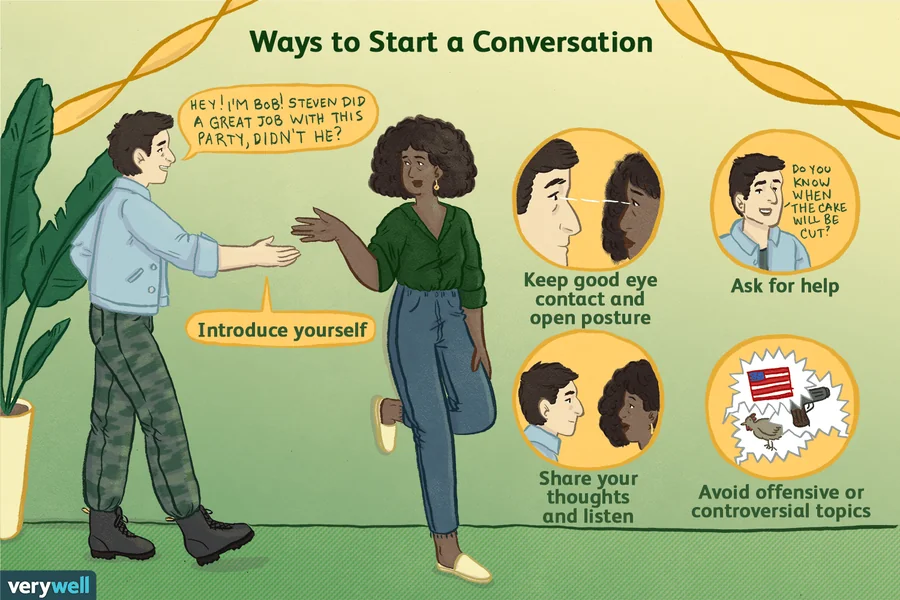
A good conversation starter is not something that is out of place and not a good fit. It must be proportionate to the context and allow for a comfortable response by the other person. Questions that need more than a yes or no answer tend to be more productive and invite further discussion.
Curiosity is another aspect that is crucial. Most people like to talk about things they are interested in. It is important to show interest in their stories, it is a good way to get a positive impression and keep the conversation going.
Relevance also matters. Sometimes, the best starters of conversation are environment, experience or common circumstances. When you ask something which both can see or relate to, you make an instant connection.
Respect too is crucial. The key to building trust and comfort in a conversation is to not make it too personal or controversial. More personal topics can be used as the conversation unfolds.
Conversation Starters for Meeting New People
It can be difficult to meet new people and interact with them if there is not a lot known about them. Simple and open-ended questions often work best in these situations.
Interest questions, hobbies and experiences can be used to get information from people without pressuring them. It is possible to have meaningful conversations by asking about free time activities or what attracted them to the event.
Excellent questions to ask are also travel related, since many like to share their story about places they have visited or would like to visit. Speaking about favourite places is a good way to learn about people’s interests and may lead to further questions.
Current experiences can also be wonderful beginnings! For events that are now occurring or going to occur, commenting on the event is a natural starting point. Since both of them reside in the same setting, discussions feel easier to carry on as both parties have some sort of common interest.
The aim is to make sure you are relaxed and not attempting to impress the other person. Rarely do information gathering techniques or tricks cement the impression better than a genuine curiosity.
Using Conversation Starters in Online Communication
Technology is a valued area of today’s life. Many conversations start online, whether it is social media, messaging apps, or online communities. The rules are the same, but there are different issues with communication online.
Context becomes particularly significant in the communication online environment. Use an interest, reference to a recent post or common activity as a starting point. Individual messages tend to be more effective than mass greetings.
When it’s used right, humor can be an effective tool in online conversations. Lighthearted observation/comment can contribute to a positive tone. It is important to keep humorous language respectful and easy to understand, however.
Interest questions tend to be effective in that they are likely to elicit detailed responses. Most people like to be engaged when they know that they are being listened to.
It is essential to be patient in the online communication system. Responses may not be immediate as compared to face to face conversation. Allowing one to respond allows the interaction to remain comfortable, with no pressure.
How to Keep a Conversation Going
Once you have an answer you have to find it for Whats A Good Convo Starter. It is important to keep the dialogue going by not only listening but actively participating.
Asking follow-up questions is one good approach. If a person tells you, let them know you’re interested in the information so as to promote ongoing sharing. Ask follow-up questions to show them that you’re listening and appreciate what they have to say.
Also, personal experiences can help to reinforce the connection. Both should take turns to talk. Sometimes it is useful to tie them in with the story of the person.
Non-verbal communication is relevant in face-to-face interactions. Facing forward, smiling and being positive and engaged are all key in creating a welcoming environment. Many times these nonverbal signals are a more effective way of demonstrating interest than just a verbal exchange.
Don’t think too much about having to say the right thing. A lot of people have more fluid discussions when they focus on listening instead of thinking about what they want to say next. Finally, discussions are often better when they result from real interaction; and in that sense, nothing is better than a carefully prepared script.
Common Mistakes to Avoid
Although conversation starters can be useful, there are some pitfalls that can make them less effective. Knowing the pitfalls can help make your communication skills better and interactions more fun.
One common error is posing questions that could only have a single word answer. Questions which encourage the giving of more detailed answers tend to stimulate more fruitful discussion. Opens-ended questions allow opportunities for exploration and discovery.
One error is talking too much about yourself. Although it is okay to share personal experiences, conversations should be balanced. Allows the other person to talk and establishes rapport and trust.
Can also negatively affect talks by interruption. Respects and promotes people’s openness by giving them time to complete their thoughts. In many cases conversations are more successful when they are based on active listening rather than writing.
Another problem is that of overthinking. People relate so much on what to say that there is no time for real engagement. Keep in mind that most talks don’t need a fancy start up. Being simple and sincere in communication can be sufficient.
Lastly, don’t force a conversation where there isn’t the interest on the other person’s end. Not all interactions will necessarily result in a lengthy conversation and that is fine. Protecting the borders can make for a successful social experience.
Final Thought
There is no one, right answer to the question of What a Good Convo Starter because each situation is unique. But there are common characteristics of the best conversation starters. They are naturally, respectfully and relevantly and engage in meaningful response. However it can be either in person, a professional networking or online; a thoughtful opening can make the difference to create genuine communication.
The essence of good conversation is curiosity, listening, and engaging each other not memorized lines. By putting your best foot forward and taking an interest in the other person’s ideas and history, it is possible to make introductions into delightful and memorable conversations. Conversations, like any skill, will come easy as time goes on, and every conversation allows you to build confidence and communication skills.
FAQs
What is a good conversation starter?
A good conversation starter is a question or comment that encourages the other person to share information, opinions, or experiences in a comfortable way.
Why are conversation starters important?
Conversation starters help break the ice, reduce awkwardness, and create opportunities for meaningful connections.
What are the best topics for starting conversations?
Common interests, hobbies, travel experiences, current events, and shared environments are often effective conversation topics.
How can I start a conversation with someone I do not know?
You can ask open-ended questions about their interests, experiences, or the situation you both share at the moment.
Are conversation starters useful in online communication?
Yes. Personalized questions and comments related to shared interests can help create engaging online conversations.
What should I avoid when starting a conversation?
Avoid overly personal questions, controversial topics, interrupting, and questions that only require yes or no answers.
How do I keep a conversation going after it starts?
Listen carefully, ask follow-up questions, share relevant experiences, and show genuine interest in the other person’s responses.